

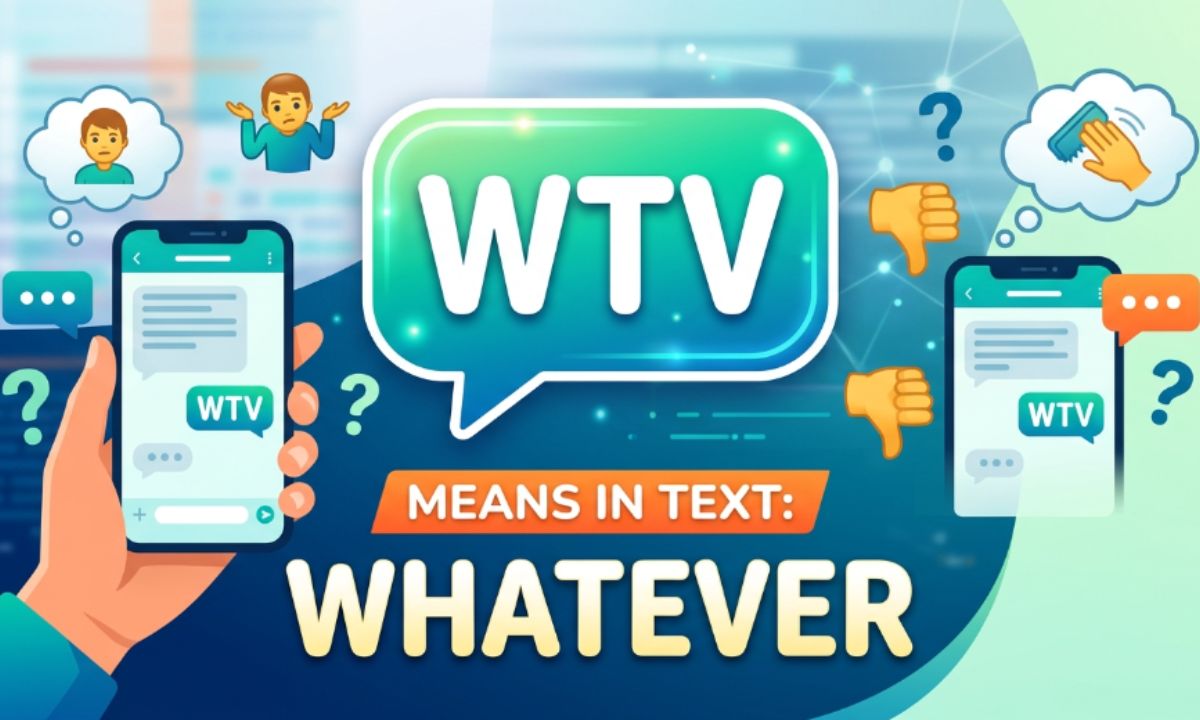
WTV meaning in text is one of the most searched texting slang questions among Gen Z and millennial chatters today. If you have ever received a one-word reply like “wtv” and wondered whether the person is annoyed, bored, or simply easygoing, you are not alone. This short abbreviation shows up everywhere — group chats, TikTok comments, Snapchat streaks, and even dating app DMs — and its tone can shift completely depending on context.
This guide breaks down everything you need to know about WTV: what it stands for, why people use it, how to read the tone behind it, and how to reply the right way. By the end, you will never have to second-guess a “wtv” text again.
Quick Answer: What Does WTV Mean?
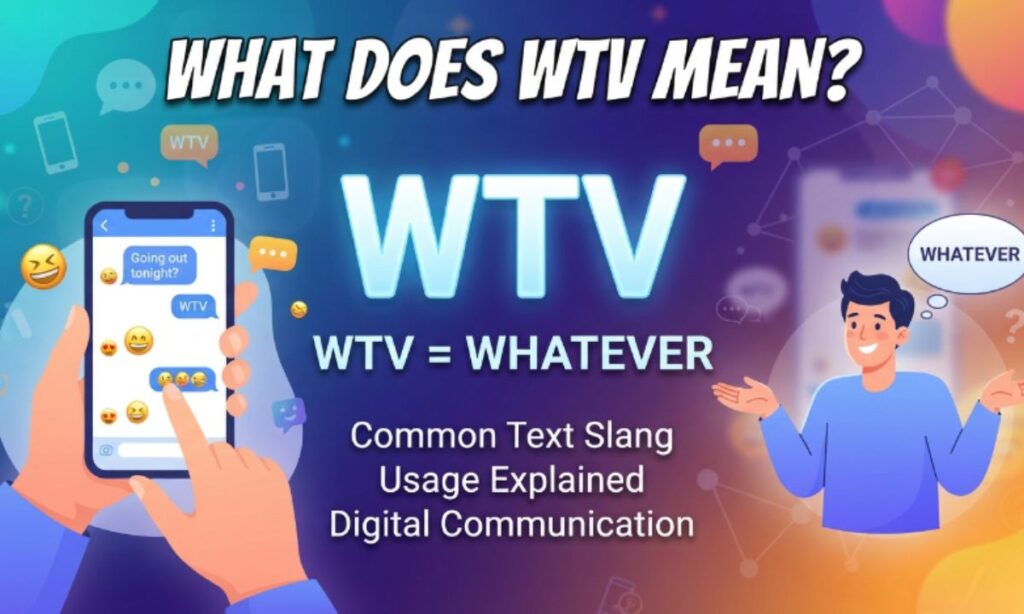
WTV is texting shorthand for “whatever.” It is used to show indifference, agreement without much enthusiasm, or a casual way to end a topic. Depending on tone, punctuation, and the conversation before it, WTV meaning can shift from relaxed and friendly to cold and dismissive.
What Does WTV Stand For?
WTV simply stands for the word “whatever.” People remove the vowels to type faster, a common pattern in texting slang (similar to “btw” for “by the way” or “idk” for “I don’t know”).
Why Do People Use WTV?
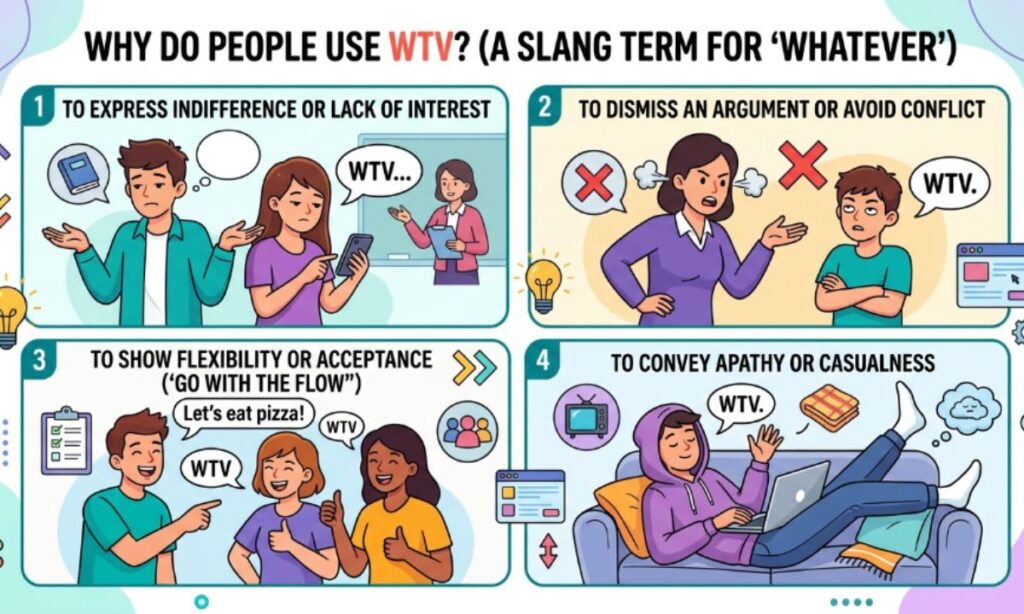
People use WTV because it saves time and keeps conversations feeling casual. Common reasons include:
- They don’t want to type the full word “whatever.”
- They genuinely have no preference on a decision.
- They want to end a small disagreement without escalating it.
- They feel mildly annoyed but don’t want to explain why.
- They are texting quickly and want a low-effort reply.
The Most Common Meanings of WTV
The WTV meaning in text isn’t fixed — it changes based on the situation. Here are the five most common interpretations.
WTV Means “Whatever”
This is the literal and most frequent use. It signals that the person is fine with any outcome.
WTV Means “I Don’t Care”
Here, WTV shows genuine indifference. The person truly has no opinion on the topic being discussed.
WTV Means “It Doesn’t Matter”
Sometimes WTV is used to downplay a situation, suggesting the outcome isn’t important enough to debate.
WTV Means “Whatever, I’m Done Arguing”
In arguments, WTV often signals that someone wants to stop the conversation rather than continue debating.
WTV Can Show Mild Annoyance
When paired with short replies or no punctuation, WTV can carry a slightly irritated or dismissive tone.
WTV Meaning Slang
As internet slang, WTV meaning in text has grown far beyond its literal definition of “whatever.” It now functions as a mood — a quick way to express a shrug through text. Slang dictionaries generally agree that WTV is neutral by default, but real-world use often adds emotional weight depending on who sends it and how.
WTV Meaning Urban Dictionary
On slang reference sites, WTV meaning in text is typically defined as a casual, shortened version of “whatever,” used to express indifference, agreement, or a dismissive attitude toward a topic or question.
What Does WTV Mean from a Girl

When a girl texts WTV, it usually means she genuinely doesn’t have a preference, or she’s slightly annoyed and doesn’t want to keep discussing the topic. The surrounding words and emojis usually reveal which one it is.
WTV Meaning in Text from a Guy
When a guy sends WTV, it often reflects a laid-back attitude or low interest in continuing the topic. It can also appear during disagreements as a way to avoid further conflict.
WTV Meaning Medical
Outside of texting slang, WTV occasionally appears in medical or clinical shorthand contexts unrelated to “whatever,” though this usage is rare and industry-specific. In everyday texting, the slang meaning almost always applies.
WTV Meaning in Different Contexts
The WTV meaning in text depends heavily on where and how it’s used. Here’s a breakdown of common contexts.
WTV in a Casual Text
Between friends, WTV usually just means “you decide” or “I’m flexible.”
WTV During an Argument
In tense conversations, WTV often signals frustration or a desire to stop debating.
WTV in a Group Chat
In group settings, WTV is commonly used to agree with the majority decision quickly.
WTV in a Comment
On social posts, WTV can express mild disagreement or a dismissive reaction to content.
WTV Meaning on Different Platforms
WTV Meaning on TikTok
On TikTok, WTV meaning in text is almost always “whatever,” used casually in comments and captions to react to trends, opinions, or drama without writing a full sentence.
WTV Meaning on Snapchat
Because Snapchat messages disappear quickly, users prefer short slang like WTV. Here, it typically keeps its relaxed, casual meaning.
WTV Meaning on Instagram
On Instagram DMs and comments, WTV meaning in text usually shows indifference or agreement, especially when replying to polls, questions, or casual chats.
WTV Meaning on WhatsApp
WhatsApp conversations tend to be more personal, so WTV here can lean either playful or slightly cold, depending on the relationship between the texters.
WTV Meaning on Discord
In gaming and community servers, WTV is used constantly to agree with group decisions or brush off minor disagreements quickly.
WTV Meaning in Gaming
During gameplay chats, WTV usually means “I don’t mind” when choosing modes, teams, or strategies: a fast way to move the game along.
WTV Meaning in Dating and DMs
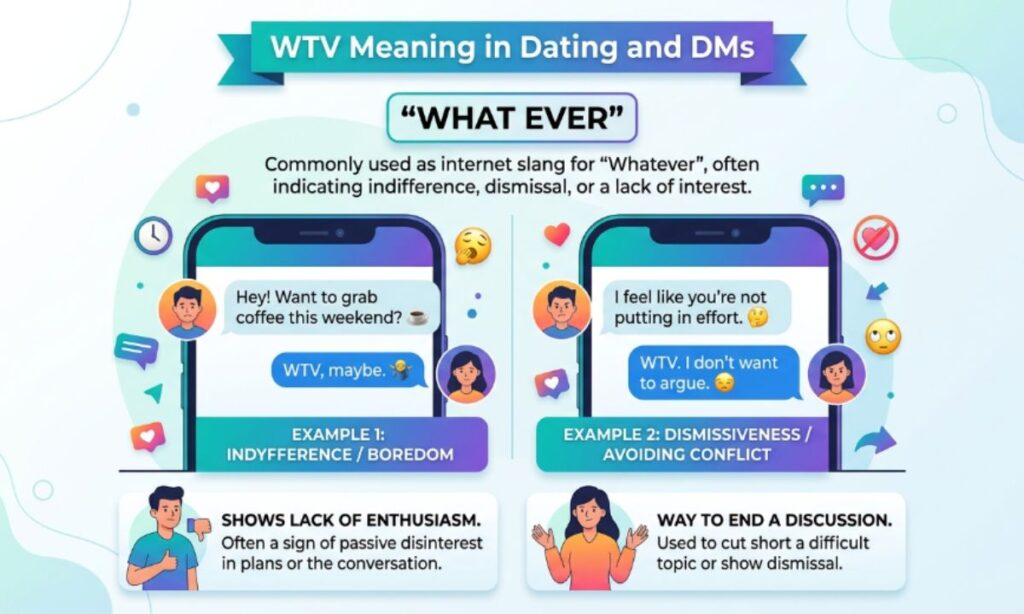
In dating conversations, WTV meaning in text can carry more emotional nuance. Tone matters even more here because misreading it can affect the whole conversation.
Friendly Example
“Wanna get coffee or boba? Wtv works for me 😊” relaxed and open to either option.
Playful Example
“Wtv you say, boss”: teasing and lighthearted.
Cold Example
“Wtv.” (no punctuation, no emoji): often signals disinterest or annoyance.
Is WTV Rude?
WTV is not inherently rude. Whether it sounds polite or harsh depends entirely on context, tone, and the relationship between the people texting.
WTV Can Be Polite or Neutral
When used to show flexibility (“Wtv, you choose!”), it comes across as easygoing and agreeable.
WTV Can Sound Rude
When used bluntly, without punctuation, or during an unresolved disagreement, WTV can feel dismissive or cold.
Is WTV Flirty?

WTV can occasionally carry a flirty, teasing tone, especially when paired with emojis or playful banter in dating conversations. On its own, though, it’s more neutral than flirty.
Is WTV Offensive?
WTV is not offensive by definition. It only feels hurtful when it’s used to shut down a conversation someone cares about, making them feel dismissed.
When Should You Use WTV?
- When you genuinely have no preference.
- When chatting casually with friends.
- When you want to keep a conversation light.
- When ending a minor disagreement peacefully.
When Should You Avoid WTV?
- In professional emails or workplace chats.
- When someone needs a thoughtful, caring response.
- During serious or emotional conversations.
- When clarity matters more than casualness.
WTV vs Whatever
| Aspect | WTV | Whatever |
| Format | Texting abbreviation | Full word |
| Tone | Casual, quick | Can sound more formal or serious |
| Best used in | Texts, DMs, comments | Speech, formal writing |
| Common platforms | TikTok, Snapchat, Discord | Everywhere |
WTV vs IDC
WTV means “whatever,” while IDC means “I don’t care.” They’re similar but not identical — IDC is more direct and can sound blunter, while WTV can also mean “you choose.”
WTV vs NVM
| Term | Meaning | Typical Use |
| WTV | Whatever / I don’t mind | Choosing between options, ending debates |
| NVM | Never mind | Dropping a topic entirely, changing your mind |
WTV
Used when you’re indifferent to an outcome or want to stop arguing.
NVM
Used when you’re withdrawing a statement, question, or request altogether.
WTV vs IDK
WTV shows indifference to a decision, while IDK (“I don’t know”) shows a genuine lack of information or certainty. They are not interchangeable.
WTV vs IDC
As covered above, IDC (“I don’t care”) is more emotionally direct, while WTV can range from neutral to mildly dismissive depending on tone.
Common Mistakes People Make With WTV
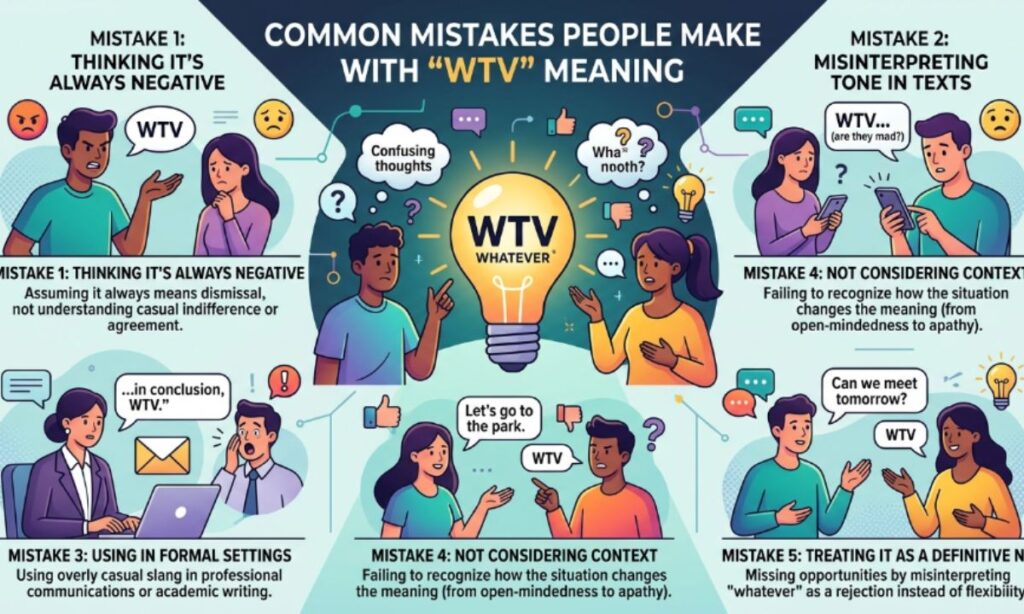
Mistake 1: Assuming WTV Always Means Someone Is Angry
Most of the time, WTV is neutral or friendly: not a sign of anger.
Mistake 2: Thinking WTV Means “I Don’t Know”
WTV shows indifference, not uncertainty. That meaning belongs to “idk.”
Mistake 3: Using WTV in Professional Messages
WTV is informal slang and can sound careless in work emails or formal conversations.
Mistake 4: Reading Too Much Into One Short Message
A single “wtv” without context can be misread. Look at the full conversation before assuming the tone.
Mistake 5: Assuming the Same Tone Everywhere
WTV meaning in text can shift between platforms and relationships: what’s casual with a friend may feel cold from a stranger.
How to Understand the Tone of WTV
1. The Words Around It
Extra words like “sure” or “lol” soften the tone, while a standalone “wtv” feels blunter.
2. Punctuation
A period after “wtv.” often signals a colder, more final tone than no punctuation at all.
3. Emojis
Emojis like 😅 or 😊 usually indicate a lighthearted, non-serious tone.
4. The Conversation Before It
If the previous messages were tense, WTV likely reflects frustration rather than flexibility.
5. The Person’s Usual Style
Some people always text short and blunt: their WTV may not carry any extra emotion at all.
Real Conversation Examples of WTV

Example 1: Choosing Food
A: “Pizza or tacos tonight?”
B: “Wtv, I’m good with either 🍕”
Example 2: Choosing a Movie
A: “Comedy or horror?”
B: “wtv you pick”
Example 3: Ending a Small Argument
A: “Can we talk about this later?”
B: “wtv.”
Example 4: Being Unbothered
A: “He said he’s not coming.”
B: “wtv, more food for us”
Example 5: Group Planning
A: “Should we meet at 6 or 7?”
B: “wtv works”
Example 6: A Slightly Cold Reply
A: “I’m sorry, I got busy.”
B: “wtv”
How to Reply When Someone Says WTV
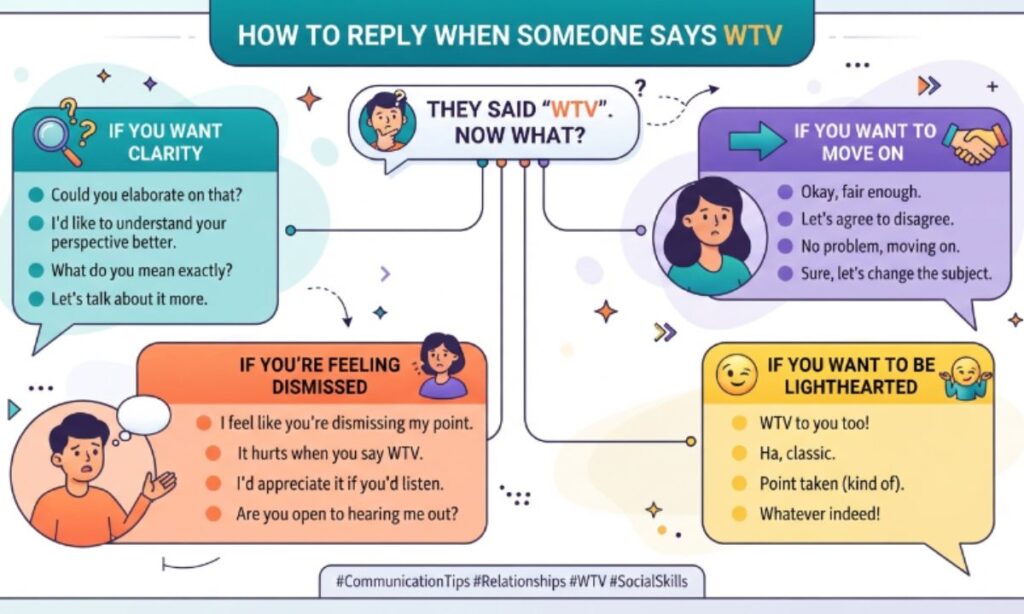
If They Mean “You Choose”
Simply confirm a decision and move forward — no need to overanalyze.
If They Sound Annoyed
Ask a gentle follow-up question to check if something is actually bothering them.
If They Say WTV During Planning
Suggest an option confidently since they’ve handed you the choice.
If You Want to Keep Things Playful
Reply with a light joke or emoji to keep the tone easygoing.
If You Think They Are Being Dismissive
Give them space, then follow up later when the conversation feels calmer.
How to Reply to WTV in a Flirty Conversation
In dating chats, a playful reply like “wtv? okay now I have to know what you’re thinking 👀” can turn a flat “wtv” into a fun, engaging exchange instead of letting the conversation stall.
Can WTV Mean Something Else?
Outside of texting, WTV rarely stands for anything else in everyday conversation. In niche technical or medical shorthand, similar letter combinations may exist, but in texting and social media, the WTV meaning in text is almost always “whatever.”
Related Texting Abbreviations
- IDC: I don’t care
- IDK : I don’t know
- NVM: Never mind
- TBH: To be honest
- WBU: What about you
- FR: For real
- NGL: Not gonna lie
Frequently Asked Questions
What does WTV mean in a text message?
WTV means “whatever.” It’s used to show indifference, agreement, or a casual way to end a topic.
Is WTV rude to say?
Not usually. WTV is neutral by default and only sounds rude when the context or tone is dismissive.
What does WTV mean from a girl or a guy?
It generally means the same thing regardless of gender — indifference or flexibility — though tone can add emotional nuance.
Does WTV mean I don’t care?
Yes, WTV can mean “I don’t care,” especially when used without extra context or emojis.
What’s the difference between WTV and IDC?
WTV means “whatever” and can suggest flexibility, while IDC directly means “I don’t care” and often sounds more blunt.
Can WTV be flirty?
Yes, when paired with playful words or emojis in a dating conversation, WTV can carry a teasing, flirty tone.
Should I use WTV in professional messages?
No. WTV is casual slang and can make you sound careless in work emails or formal conversations.
What does WTV mean on Snapchat or TikTok?
On both platforms, WTV meaning in text is almost always “whatever,” used casually in chats, comments, and captions.
How do I know if someone is annoyed when they text WTV?
Check for missing punctuation, lack of emojis, short replies, and the tone of the conversation leading up to it.
Final Answer
At its core, WTV meaning in text is simple: it stands for “whatever.” But as this guide shows, the real meaning lives in the details — punctuation, emojis, timing, and the relationship between the people texting. Whether it’s a relaxed “you choose” between friends or a colder reply during an argument, understanding the tone behind WTV helps you read conversations more accurately and reply with confidence. Next time you see a “wtv” pop up on your screen, you’ll know exactly what it means — and how to respond.

Hi, I’m Alex Carter, a passionate content creator and language enthusiast dedicated to exploring the true meanings behind words, phrases, and modern slang. With over 5 years of experience in content research and digital publishing, I specialize in breaking down complex terms into simple explanations. I focus on delivering well-researched, up-to-date, and SEO-optimized content that answers real user queries.