

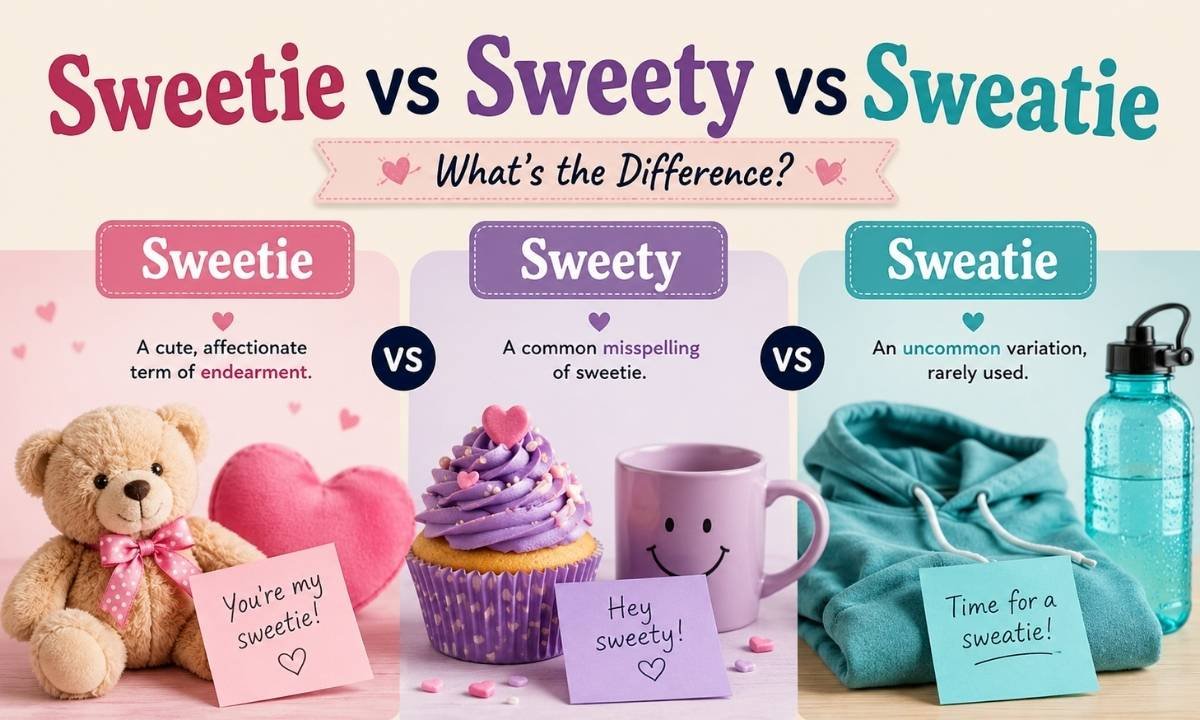
Sweetie vs Sweety vs Sweatie is one of those small spelling puzzles that trips up even confident English speakers. You’ve probably typed a quick text to someone you care about, paused halfway through the word, and wondered which version actually looks right. Is it “sweetie,” “sweety,” or did autocorrect just embarrass you with “sweatie”? This guide breaks down the real answer, backed by grammar rules, word history, and everyday usage, so you never have to second-guess yourself again.
Sweetie vs Sweety vs Sweatie: Why These Spellings Confuse People
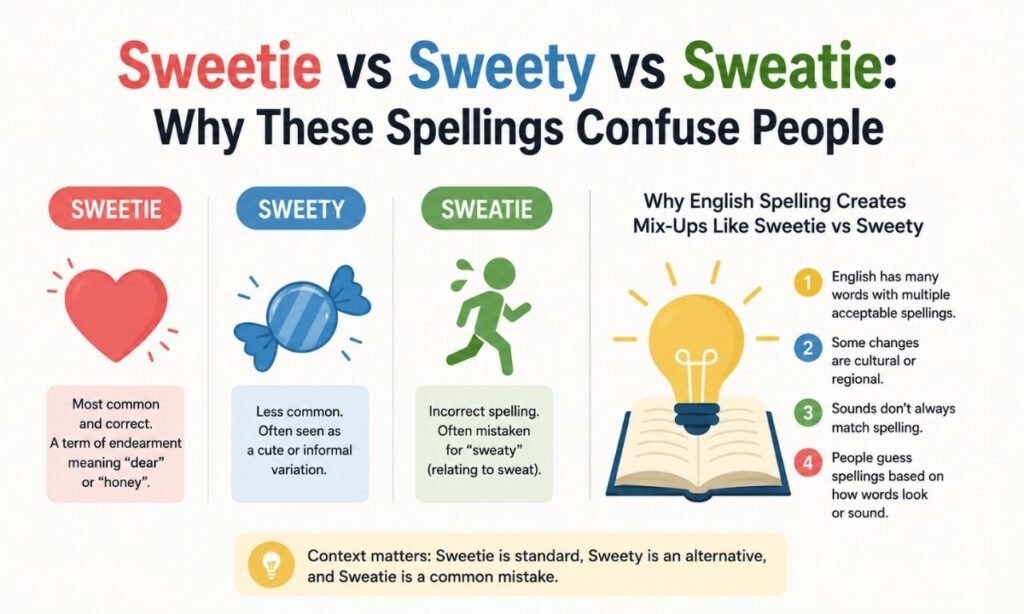
English is full of words that sound almost identical but land very differently on the page. The confusion around Sweetie vs Sweety vs Sweatie comes down to three things: pronunciation, spelling habits from other languages, and simple autocorrect accidents.
All three words share the same “swee” or “swea” starting sound when spoken quickly, which is exactly why people mix them up in texts, captions, and even greeting cards. Add in regional spelling variations and the influence of casual internet writing, and you get a word that’s misspelled far more often than most people realize.
Why English Spelling Creates Mix-Ups Like Sweetie vs Sweety
English doesn’t always spell words the way they sound. The “-ie” and “-y” endings are a classic example both can turn an adjective into a cutesy, affectionate noun, but only one version is considered standard. This is the exact root of the Sweetie vs Sweety vs Sweatie confusion: English allows informal “-y” endings in casual speech (think “doggy,” “mommy,” “sweetie”), but dictionaries and style guides only recognize specific spellings as correct.
Throw in phonetic typing where people write words the way they sound rather than the way they’re spelled and “sweety” starts to feel just as valid as “sweetie,” even though it isn’t the standard form.
Sweety Meaning
Understanding the sweety meaning is a key step in resolving the wider Sweetie vs Sweety vs Sweatie debate. The sweety meaning is identical to “sweetie” — it’s used as a term of endearment for someone you love, admire, or find charming. “Sweety” is not wrong in the sense of being nonsensical; people understand it instantly. However, it’s considered a non-standard or informal spelling variant rather than the dictionary-approved form. You’ll often see “sweety” used in casual texting, social media captions, and in parts of South Asia and the Middle East, where it has become a widely accepted alternative spelling in everyday English usage.
Sweetie vs Sweety: The Real Difference
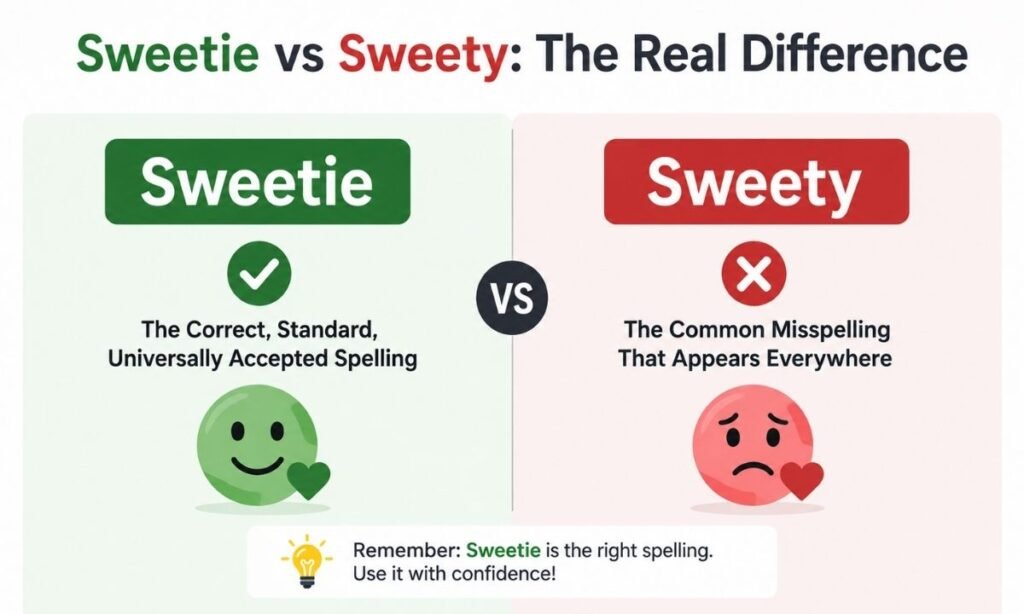
At the heart of the Sweetie vs Sweety vs Sweatie debate is a simpler question: sweetie vs sweety, which one is actually correct? The short answer is that “sweetie” is the standard, dictionary-recognized spelling, while “sweety” is a common but informal variation.
| Feature | Sweetie | Sweety |
| Standard spelling | Yes | No |
| Found in major dictionaries | Yes (Merriam-Webster, Oxford, Cambridge) | Rarely, if at all |
| Common usage | Global, especially US/UK | Popular in casual/regional writing |
| Formality | Informal but accepted | Very informal |
| Best used for | Texts, conversation, writing | Casual chats, social captions |
Sweetie — The Correct, Standard, Universally Accepted Spelling
In any breakdown of Sweetie vs Sweety vs Sweatie, this is the version worth remembering first. “Sweetie” is the spelling you’ll find in Merriam-Webster, Cambridge, and Oxford dictionaries. It’s used as both a term of endearment and, in British English, a word for candy or a sweet treat. Because it appears in style guides and formal references, “sweetie” is the safest choice whenever you’re writing anything that needs to look polished — emails, articles, captions, or professional-adjacent messages.
Sweety — The Common Misspelling That Appears Everywhere
Despite not being the dictionary-standard form, “sweety” shows up constantly online, in advertising, and in everyday texting. It’s especially popular in regions where English is a second language, since the “-y” ending feels more intuitive to spell phonetically. When comparing Sweetie vs Sweety vs Sweatie, “sweety” sits in a gray area: not technically correct, but widely understood and rarely considered a serious mistake.
Sweatie: The Odd One Out — What It Really Means
Now for the word that doesn’t belong in the same conversation at all: “sweatie.” Unlike “sweetie” and “sweety,” this spelling has nothing to do with affection.
What Sweatie Actually Means
Of the three spellings compared in this Sweetie vs Sweety vs Sweatie guide, “sweatie” is the least legitimate. “Sweatie” isn’t a recognized standard word in most dictionaries. When it does appear, it’s typically a misspelling or a playful, informal way of describing someone who sweats a lot, or referring to sweat-related gear (like a “sweatie towel” in gym slang). It’s occasionally used as a nickname in niche or humorous contexts, but it’s not an accepted term of endearment.
Sweatie vs Sweaty — A Common Typing Mishap
This is the real source of confusion. “Sweaty” (meaning covered in or producing sweat) is the correct spelling of the adjective. “Sweatie” is simply a typo or a phonetic misspelling of “sweaty,” often triggered by muscle memory from typing “sweetie” moments earlier. If you meant to describe a workout session, you wanted “sweaty,” not “sweatie.” Understanding this distinction is key to clearing up the entire Sweetie vs Sweety vs Sweatie confusion once and for all.
Is Sweatie Ever Used as a Pet Name?
Rarely, and usually as a joke. Some couples or gym buddies use “sweatie” ironically, playing off its similarity to “sweetie” while referencing a sweaty run or workout. Outside of that humor, it has no real standing as a genuine term of endearment.
Sweetie Meaning from a Girl

Context is everything in the Sweetie vs Sweety vs Sweatie conversation, and that’s especially true here. When a girl calls someone “sweetie,” it typically signals warmth, friendliness, or affection — but context matters enormously. It can mean:
- Genuine romantic affection, if used with a partner
- Platonic warmth, especially between close friends
- A casual, friendly greeting with no deeper meaning
- Motherly or caring tone, often used toward younger people or children
Tone, relationship history, and the situation all shape what “sweetie” really signals, so it’s worth reading the full context rather than assuming one fixed meaning.
Sweetie Pie Meaning
Beyond the core Sweetie vs Sweety vs Sweatie comparison, there’s an extended form worth knowing. “Sweetie pie” is an extended, extra-affectionate version of “sweetie,” often used for children, romantic partners, or close family members. The “pie” addition intensifies the warmth, similar to how “honey bun” or “sugar plum” work. It’s especially common in American Southern English and tends to feel homier and more nostalgic than plain “sweetie.”
Pet Names in American English and Where “Sweetie” Fits
Pet names are a huge part of everyday American English, and “sweetie” is one of the most versatile.
Why People Use Pet Names
Pet names create closeness quickly. They signal affection, familiarity, and emotional safety, often used in romantic relationships, family bonds, and even friendly customer service in certain regions.
Common Pet Names in American English
- Honey
- Babe / Baby
- Darling
- Sweetheart
- Sweetie
- Sugar
- Love
Why “Sweety” and “Sweatie” Don’t Fit the Pattern
Every widely accepted pet name in American English follows standard spelling conventions found in dictionaries. “Sweety” breaks that pattern by using a non-standard ending, and “Sweatie” breaks it entirely by referencing sweat rather than sweetness. This is exactly why, in any serious discussion of Sweetie vs Sweety vs Sweatie, only “sweetie” earns a real place on this list.
Where These Words Come From: The History Behind Sweet, Sweetie & Sweety
The Origin of “Sweet”
To fully understand Sweetie vs Sweety vs Sweatie, it helps to start at the root word itself. “Sweet” traces back to Old English “swete,” itself rooted in Proto-Germanic language describing pleasant taste. Over centuries, “sweet” expanded beyond flavor to describe kindness, charm, and affection — the emotional meaning we still use today.
How “Sweetie” Developed
By adding the diminutive “-ie” suffix (common in English for creating affectionate or informal nouns, as in “doggie” or “auntie”), “sweet” became “sweetie” sometime in the 18th and 19th centuries. It first referred to candy in British English before evolving into a term of endearment for people.
How “Sweety” Emerged
“Sweety” isn’t a separate historical development — it’s a phonetic spelling variant that grew popular through informal writing, texting culture, and regions where English spelling conventions are less rigid. It shares “sweetie’s” meaning entirely but never earned dictionary status.
Context Matters: When to Use These Terms (and When to Avoid Them)
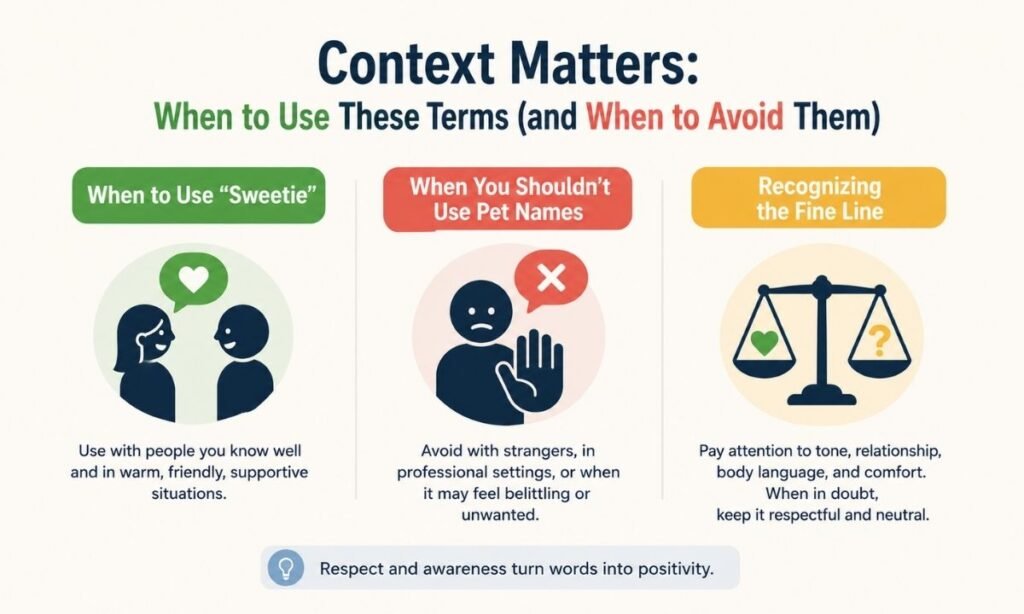
Knowing when and where to use each spelling is often the most practical part of the Sweetie vs Sweety vs Sweatie discussion.
When to Use “Sweetie”
- With romantic partners
- With close friends or family
- Talking affectionately to children
- In warm, casual customer service settings (regionally common in the US South)
When You Shouldn’t Use Pet Names
- In professional emails or workplace meetings
- With strangers or new acquaintances
- In formal writing or business communication
- When the other person hasn’t shown they’re comfortable with it
Recognizing the Fine Line
Calling a coworker or an unfamiliar person “sweetie” can come across as condescending or overly familiar, even if the intent is friendly. Reading the relationship and setting correctly prevents the term from feeling patronizing.
Choosing the Right Word: Practical Tips You Can Use Today
These quick, practical tips make the Sweetie vs Sweety vs Sweatie decision easy every time you write.
Spell it Correctly Every Time
Default to “sweetie” in writing that matters — emails, captions, cards, or anything public-facing. It’s the version dictionaries and editors recognize.
Avoid “Sweety” Unless It’s Playful
Save “sweety” for relaxed texting with people who won’t mind the informal spelling. Avoid it in resumes, professional messages, or anything meant to look polished.
Treat “Sweatie” as a Mistake to Avoid
Unless you’re intentionally making a sweaty-workout joke, treat “sweatie” as a typo. Double-check autocorrect before hitting send.
Etiquette Tips for Using Pet Names
- Match the term to the relationship, not the mood of the moment.
- Ask if someone is comfortable with pet names before using them regularly.
- Avoid pet names entirely in workplace or formal communication.
- Save “sweetie pie” and similar intensified terms for close, established relationships.
Personal vs Professional Examples
| Situation | Recommended Term | Why |
| Texting a partner | Sweetie / Sweetheart | Warm and appropriate |
| Talking to your child | Sweetie / Sweetie pie | Nurturing and natural |
| Emailing a client | Neither | Too informal for business |
| Casual chat with a friend | Sweetie or Sweety | Both acceptable informally |
| Gym banter | Sweaty (not “sweatie”) | Correct spelling for the context |
FAQs
These frequently asked questions cover the most common searches people run when comparing Sweetie vs Sweety vs Sweatie.
Do we say sweety or sweetie?
“Sweetie” is the correct, dictionary-recognized spelling. “Sweety” is a common informal variant with the same meaning but no formal dictionary standing.
Can I call my girl sweetie?
Yes, “sweetie” is a widely accepted, affectionate term for a partner, as long as she’s comfortable with pet names in your relationship.
Is “sweety” the correct spelling?
No. “Sweety” is a popular alternative spelling, but “sweetie” is the version recognized by major dictionaries.
Is Sweety a Hindu name?
“Sweety” is sometimes used as a given name or nickname in India, popular among Hindu and other South Asian communities, separate from its meaning as a term of endearment.
Is it rude to call someone sweetie?
It can come across as condescending if used with strangers, coworkers, or people who haven’t invited that level of familiarity — context and relationship matter.
What does sweetie mean in British slang?
In British English, “sweetie” can mean a piece of candy in addition to being a term of endearment for a loved one.
Why does autocorrect change sweetie to sweatie?
Autocorrect rarely does this intentionally; “sweatie” usually results from fast typing or muscle memory colliding with “sweaty,” not an actual autocorrect suggestion.
Is sweetie pie one word or two?
“Sweetie pie” is typically written as two words, though it’s sometimes hyphenated as “sweetie-pie” in more formal or stylistic writing.
Can sweetie be used for a boy?
Yes, “sweetie” is gender-neutral and works equally well for boys, girls, men, and women in affectionate contexts.
Final Thoughts
The debate over Sweetie vs Sweety vs Sweatie really comes down to one clear rule: “sweetie” is correct, “sweety” is an informal variant that many people accept in casual settings, and “sweatie” is almost always a typo for “sweaty.” Once you understand the history and context behind each spelling, you’ll never hesitate over which one to use again. Whether you’re texting a partner, writing a caption, or just curious about English spelling quirks, remembering the real difference between Sweetie vs Sweety vs Sweatie will keep your writing accurate, warm, and confusion-free.

Hi, I’m Alex Carter, a passionate content creator and language enthusiast dedicated to exploring the true meanings behind words, phrases, and modern slang. With over 5 years of experience in content research and digital publishing, I specialize in breaking down complex terms into simple explanations. I focus on delivering well-researched, up-to-date, and SEO-optimized content that answers real user queries.