

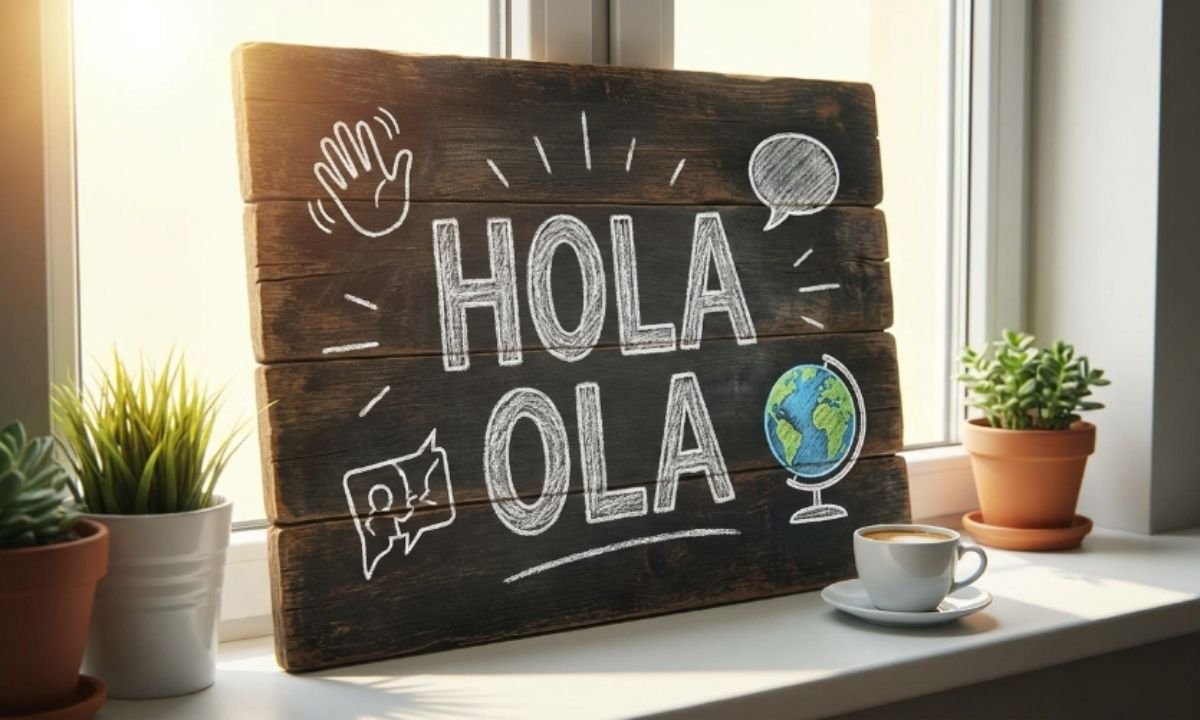
Hola or Ola — which one is right when you want to say hello? If you’ve ever paused mid-message wondering whether to drop the “h,” you’re not alone. This one-letter mix-up is one of the most common spelling slips among Spanish learners, casual texters, and even native speakers typing in a hurry.
The short answer: hola means “hello,” and ola means “wave.” They sound exactly the same when spoken, but they mean completely different things on paper. Get this wrong in a text and your friendly greeting can accidentally turn into a comment about ocean waves.
In this guide, we’ll break down everything about Hola or Ola — the meaning, the history, the pronunciation, regional usage, and the small tricks that help you never mix them up again.
Hola is Which Language
“Hola” belongs to the Spanish language, where it functions as a warm, everyday greeting equivalent to “hi” or “hello” in English. It’s also used in Aranese, a small regional language spoken in parts of Catalonia, Spain. Outside of these two, you won’t find “hola” as a standard greeting in any other major language — though its close cousin, “olá,” plays a similar role in Portuguese.
Because Spanish is spoken across more than 20 countries, “hola” is arguably one of the most recognized non-English greetings in the world. It shows up in classrooms, travel apps, movies, and social media captions everywhere.
Hola or Ola Meaning
Here’s the core distinction in a single line: hola is a greeting, and ola is a noun describing a wave of water.
- Hola — an interjection used to say hello or hi.
- Ola — a feminine noun referring to a wave, whether literal (ocean wave) or figurative (a “wave” of change, like a heatwave or a trend).
The confusion happens because both words are pronounced identically in Spanish. The “h” in “hola” is completely silent, so spoken aloud, “hola” and “ola” sound the same. The only way to tell them apart is through spelling and context — which is exactly why the Hola or Ola debate keeps popping up in search results and language forums. Anyone comparing Hola or Ola quickly notices the meaning gap is far bigger than the spelling gap.
What “Hola” Means and Why It Matters
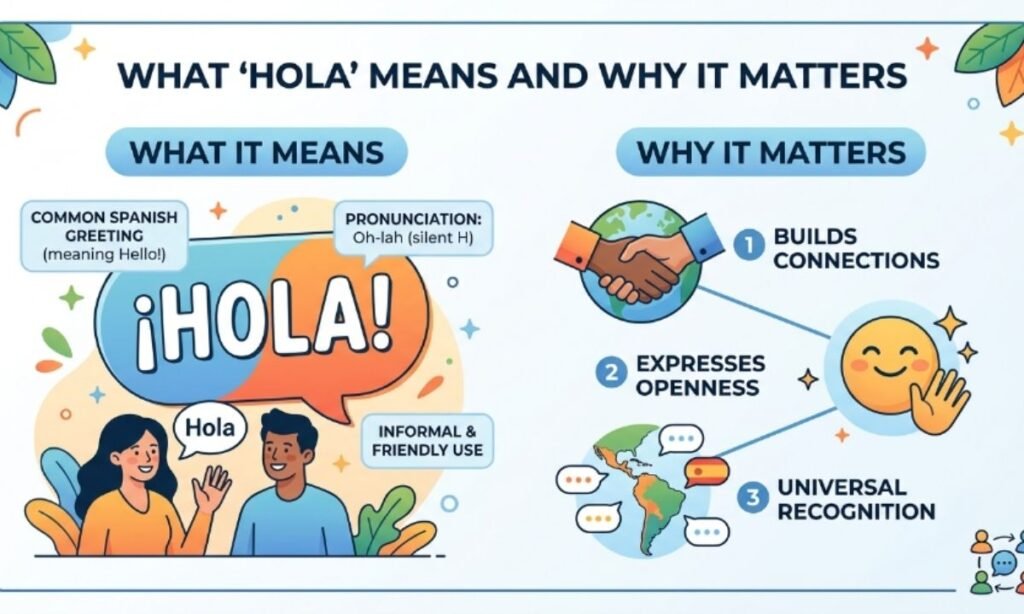
“Hola” is far more than a textbook greeting. It’s the word most learners hear first when starting Spanish, and it carries genuine cultural weight.
Here’s why it matters:
- It’s universally understood across every Spanish-speaking country.
- It works in both casual and semi-formal settings.
- It signals friendliness and openness — a small verbal handshake.
- It’s often the first Spanish word non-native speakers memorize.
Whether you’re greeting a coworker, opening a text message, or starting a customer service chat, “hola” sets a warm, approachable tone. Understanding this helps explain why getting Hola or Ola right actually matters for clear communication, especially when tone and intent need to come through clearly in writing.
Origins of “Hola”: History, Evolution & Linguistic Roots
Where did “Hola” come from?
Linguists trace “hola” back to Old Spanish and, further, to Latin interjections used to call out or draw attention, similar to “ho there!” Some scholars also link it to Arabic influence during the centuries of Moorish presence in the Iberian Peninsula, since Spanish absorbed thousands of Arabic-derived words during that period.
Why did the “H” become silent?
Spanish underwent a major sound shift centuries ago in which the Latin “f” sound at the beginning of many words softened into an “h” sound, and that “h” eventually stopped being pronounced altogether. Words like “hacer” (to do) and “hola” kept their silent “h” in spelling, even though the sound disappeared from speech.
Cultural shift
Over time, “hola” evolved from a formal attention-getting call into the relaxed, friendly greeting used today. This cultural softening mirrors how many languages simplify formal expressions into casual daily speech — the same way “how do you do” became simply “hey” in English.
Pronunciation Essentials: Why the “H” in Hola Is Silent
How to pronounce “Hola”:
Say it as OH-lah, with the emphasis on the first syllable. The “h” is never voiced.
Why the H is silent
Modern Spanish simply doesn’t pronounce the letter “h” in any native word. It’s a leftover spelling from earlier stages of the language, kept for historical and etymological reasons rather than sound.
Common mistakes to avoid
- Pronouncing the “h” like in English (“hhh-ola”) — this is a dead giveaway of a non-native speaker.
- Writing “ola” when you mean “hello,” especially when typing fast.
- Assuming pronunciation alone can tell you which spelling is correct — it can’t, since both words sound identical.
This is exactly the pronunciation trap that makes the Hola or Ola question so common among new learners.
Hola or Ola Pronunciation
Since pronunciation can’t help you choose between the two, context is your best tool. Ask yourself: am I greeting someone, or am I talking about water? If it’s a greeting, it’s always “hola.” If it’s about the ocean, weather, or a metaphorical surge, it’s “ola.” When it comes to Hola or Ola pronunciation, your ears simply won’t tell you the difference — only meaning will.
Ola Meaning in French
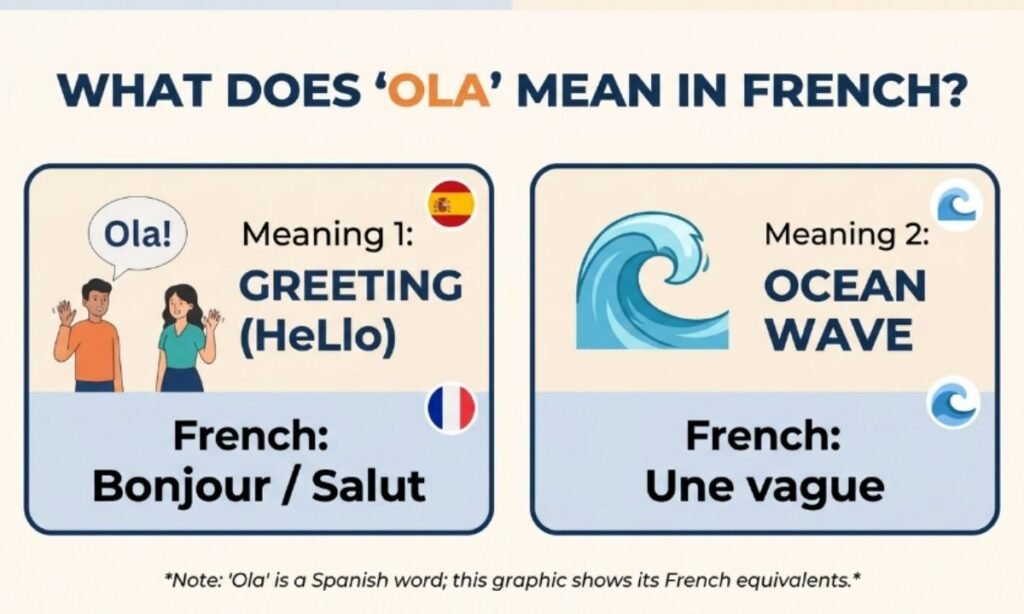
Interestingly, “ola” isn’t a standard French word at all. French uses “vague” for wave and “bonjour” or “salut” for hello. If you see “ola” used in a French context, it’s likely a borrowed reference to the stadium cheer — the “Mexican wave” — which many languages, including French, simply call “la ola” as a loanword from Spanish.
Hola or Ola Greeting
Only “hola” functions as a greeting in Spanish. “Ola” is never used to say hello in any dialect of Spanish. This is one of the clearest rules in the entire Hola or Ola conversation, and it has no real exceptions. If you remember nothing else about Hola or Ola greetings, remember this one rule.
Hola or Olá Portuguese
Portuguese uses “olá” — with an accent mark on the “a” — to mean hello. It’s pronounced with stress on the final syllable: oh-LAH. So while Spanish speakers say “hola,” Portuguese speakers say “olá,” and neither language actually uses plain “ola” (without the accent) as a greeting.
| Word | Language | Meaning | Pronunciation |
| Hola | Spanish | Hello | OH-lah |
| Ola | Spanish | Wave | OH-lah |
| Olá | Portuguese | Hello | oh-LAH |
Hola Around the Spanish-Speaking World
“Hola” is universal, but many countries layer in their own local flavor alongside it.
Regional Usage Table
| Country/Region | Common Greeting Alongside Hola | Style |
| Mexico | ¿Qué onda? | Casual, youthful |
| Spain | ¿Qué tal? | Friendly, everyday |
| Argentina | ¿Cómo andás? | Warm, conversational |
| Colombia | ¿Quihubo? | Informal |
| Puerto Rico | ¿Qué es la que hay? | Playful |
Important note
No matter the region, “hola” is always understood and always appropriate. Local slang greetings are additions, not replacements.
Variations
Some speakers stretch it playfully into “holaaa” in texts, or pair it with a name: “Hola, Carlos.” These are stylistic choices, not spelling changes — the core word never becomes “ola.”
Ola vs Hola: Exact Meaning & Key Differences
When people search for Hola or Ola, they’re usually trying to settle this exact comparison.
“Hola” = Hello
Used to greet someone at the start of a conversation, message, or interaction.
“Ola” = Wave
Used to describe water movement, or figuratively, a surge of something (a heatwave, a crime wave, a wave of applications).
Side-by-side comparison
| Feature | Hola | Ola |
| Part of speech | Interjection | Noun |
| Meaning | Hello/Hi | Wave |
| Used as greeting | Yes | No |
| Pronunciation | OH-lah | OH-lah |
| Gender | N/A | Feminine |
Real examples in sentences
- Hola, ¿cómo estás? (Hello, how are you?)
- La ola rompió cerca de la orilla. (The wave broke near the shore.)
- Hola a todos, bienvenidos. (Hello everyone, welcome.)
- Una ola de calor llegó esta semana. (A heatwave arrived this week.)
Navigating Spanish Homophones (Including Hola & Ola)
Why homophones exist in Spanish
Spanish dropped certain consonant sounds over centuries of evolution, which left behind pairs of words that sound alike but are spelled differently. The Hola or Ola pair is a textbook example of this process, and it’s often the first homophone pair Spanish learners ever encounter.
Other common Spanish homophone pairs
- Vaya / Valla / Baya — go / fence / berry
- Tuvo / Tubo — had / tube
- Hecho / Echo — done / I throw
Tips for learners:
- Learn words in context, not isolation.
- Read as much as you listen — spelling sticks better through reading.
- Practice writing short sentences with each homophone to build muscle memory.
Hola in Other Languages & Global Usage
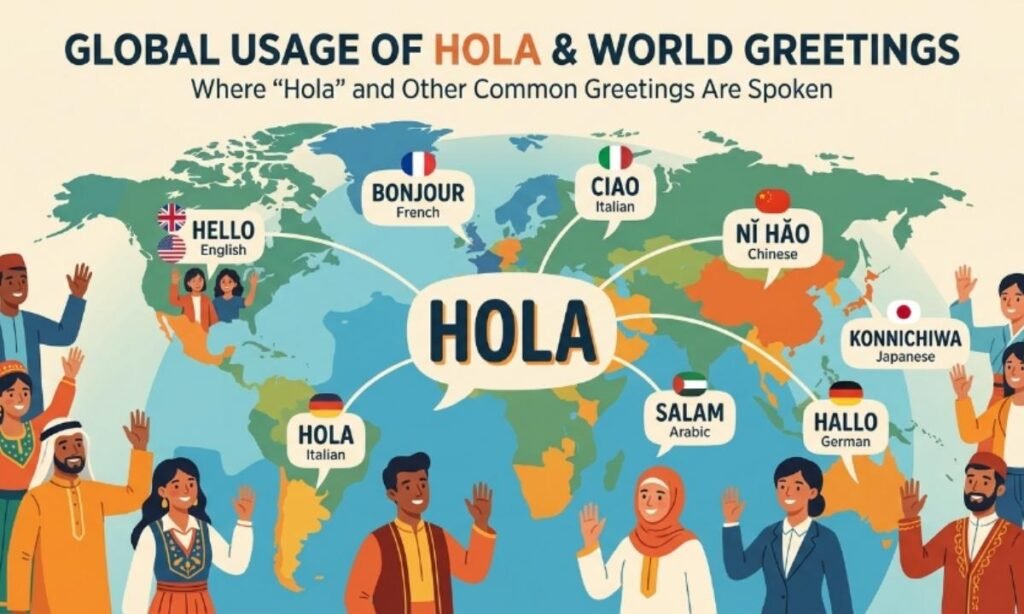
Where “Hola” appears globally
Because of Spanish’s massive global reach — over 500 million speakers — “hola” has crossed into pop culture, branding, and casual English usage. It appears in product names, song lyrics, greeting cards, and social captions well beyond Spanish-speaking countries.
Comparison table
| Language | Greeting Word | Notes |
| Spanish | Hola | Silent H |
| Portuguese | Olá | Accented final syllable |
| Italian | Ciao | Also means goodbye |
| French | Salut | Informal only |
| English | Hello | Standard |
How English Speakers Can Use “Hola” Naturally
Once the Hola or Ola distinction clicks, English speakers can start weaving “hola” into everyday conversation with confidence.
When it feels natural
Using “hola” feels natural in casual texts, among bilingual friends, in language-learning practice, or when greeting Spanish-speaking colleagues and customers.
When it feels forced
Dropping “hola” randomly into formal English writing, or overusing it as a gimmick, can come across as try-hard rather than genuine.
Examples of natural integration:
- “Hola! Just checking in on the project.”
- Opening a bilingual customer email with “Hola” before switching to English.
- Using it as a friendly icebreaker in a Spanish class or exchange program.
Professional use
In customer service and hospitality industries serving Spanish-speaking clients, starting a message with “hola” shows cultural respect and can immediately build rapport.
Hola in Pop Culture, Media & the Internet
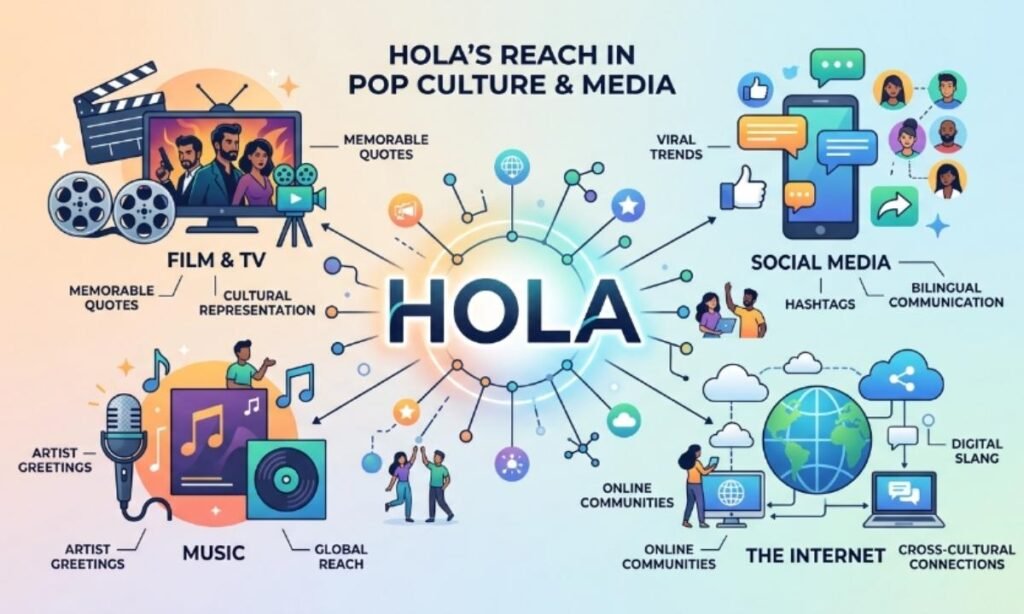
Key influences
Songs, telenovelas, and social media trends have kept “hola” firmly in the global spotlight. It’s a common caption starter, a frequent hashtag component, and a recognizable word even to people who don’t speak Spanish.
Case Study: Bilingual Social Media
Many bilingual influencers open videos or posts with “Hola” to signal warmth and cultural identity before switching languages mid-content — a pattern that has helped normalize the word for global English-speaking audiences too.
Frequently Asked Questions
Does olá mean hello?
Yes. “Olá” is Portuguese for hello, pronounced with stress on the last syllable, and it always carries an accent mark.
Do Spanish speakers say hola?
Yes, “hola” is the standard, universally used greeting across every Spanish-speaking country and region.
How can I reply to Hola?
You can simply reply with “Hola” back, or add “¿Cómo estás?” (how are you) to keep the conversation going.
Is ola a Spanish greeting?
No. “Ola” only means “wave” in Spanish and is never used to say hello. This single fact resolves most of the Hola or Ola confusion on its own.
What does hola mean in English?
“Hola” translates directly to “hello” or “hi” in English.
Why is the H silent in hola?
Spanish stopped pronouncing the letter “h” centuries ago, though it remained in spelling for historical reasons.
Can hola be used formally?
Yes, though it’s casual by nature, “hola” is acceptable in most semi-formal and everyday professional contexts.
Is hola used in Mexico the same way as in Spain?
Yes, “hola” means the same thing and is used the same way in both countries, though each region pairs it with different slang.
What is the difference between hola and holi?
“Holi” is an informal, playful variation of “hola,” often used between close friends or in casual texting.
Conclusion
If you’ve read this far, the Hola or Ola puzzle should finally feel simple. The debate between Hola or Ola really comes down to one silent letter with a big impact. “Hola” greets people, while “ola” describes a wave — and mixing the two can confuse your reader even if it sounds identical out loud. Now that you understand the meaning, origin, pronunciation, and regional nuances behind Hola or Ola, you can use both words correctly and confidently, whether you’re texting a friend, learning Spanish, or writing for a global audience. The next time you’re unsure, remember: greetings get an “h,” waves don’t.

Hi, I’m Alex Carter, a passionate content creator and language enthusiast dedicated to exploring the true meanings behind words, phrases, and modern slang. With over 5 years of experience in content research and digital publishing, I specialize in breaking down complex terms into simple explanations. I focus on delivering well-researched, up-to-date, and SEO-optimized content that answers real user queries.