

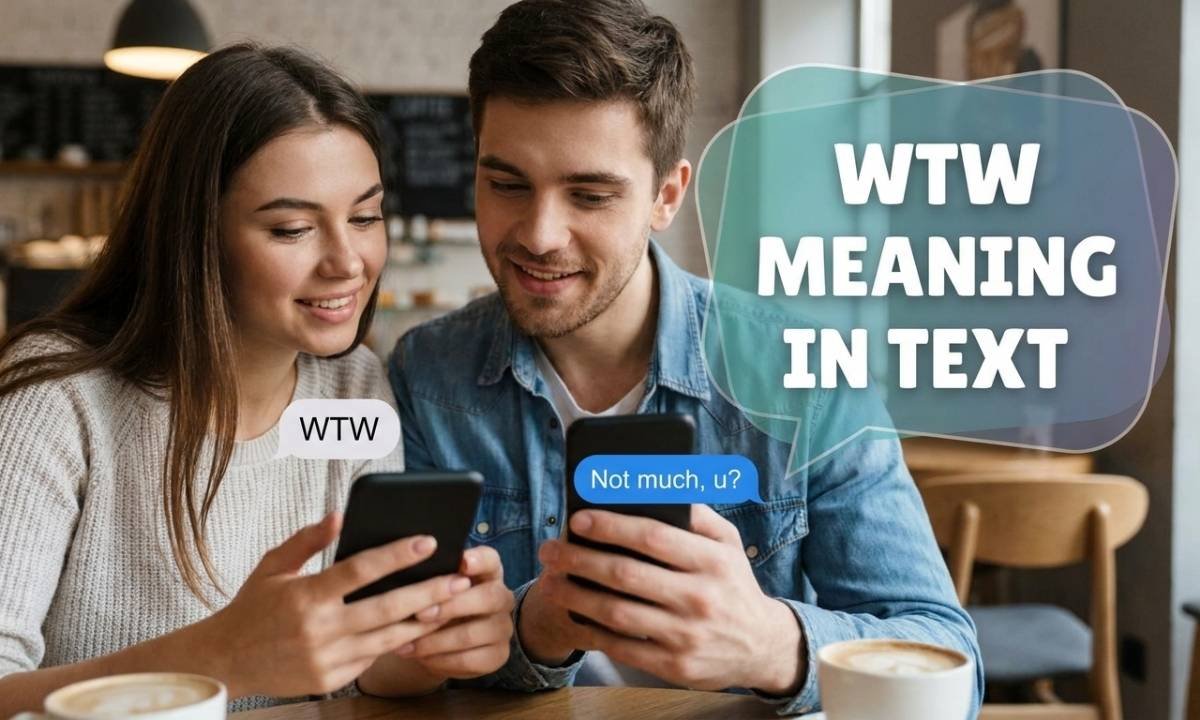
WTW meaning in text trips up a lot of people, especially when a friend or crush sends a quick “wtw?” and expects an instant reply. The confusion is understandable, since these three letters can stand for more than one phrase.
Most often, WTW means “What’s the word?”, a laid-back way of asking “What’s up?” On Snapchat and Instagram, it can also mean “What’s the wave?”, which asks about the plan or vibe for the day. Context decides which one fits.
This guide explains where the slang came from, how it differs from WYD, and how it shows up across apps. You’ll find examples and ready-to-send replies, so you’ll know what to say the next time “wtw?” appears in your inbox.
What Does WTW Mean in Text? Quick Definition
The WTW meaning in text is “What’s the word?” It is a relaxed greeting that asks what someone is doing, what is new, or what the plan is.
Here is the quick breakdown:
| Item | Detail |
| Full form | What’s the word? |
| Common alternative | What’s the wave? |
| Tone | Casual, friendly, informal |
| Closest equivalents | What’s up? / What’s good? / WYD |
| Best used with | Friends, peers, close contacts |
| Avoid with | Bosses, clients, older relatives |
A text that says only “WTW” is checking in. It is not asking you to explain anything deep. A short, relaxed reply is all it needs.
Where Did WTW Come From? Origin and Background
The phrase came first, the abbreviation second. “What’s the word?” was a spoken greeting linked to Black American English and hip-hop, where “word” means news or truth. Once people typed on phones, it shrank to WTW and spread through Twitter, Snapchat, and Instagram DMs around the mid-2010s. Gen Z later added the “wave” version.
That history explains the WTW meaning in text today: spoken street slang, typed short. It sounds natural between friends and awkward in formal writing.
WTW Meaning in Real-Life Conversations
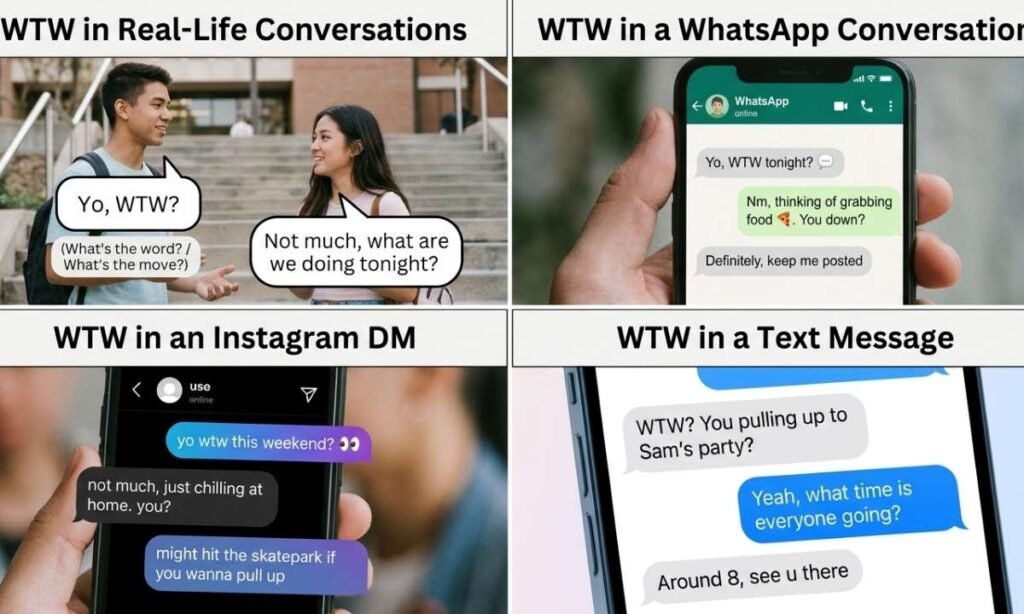
The WTW meaning in text becomes obvious once you see it in actual chats. The abbreviation changes slightly depending on the app, but the message underneath stays the same: “Tell me what’s happening.”
WTW in a WhatsApp Conversation
WhatsApp chats run long and often involve groups. Here, WTW usually opens a conversation or restarts a quiet chat.
Ali: WTW Sam: Not much, just home. You?
Ali: Same. Want to grab food later?
WTW in an Instagram DM
On Instagram, WTW often follows a story reply or a meme. It feels friendly and low-pressure.
Maya: Loved your story. WTW this week?
Zoe: Studying mostly. Maybe a coffee on Friday?
WTW in a Text Message
In plain SMS or iMessage, WTW is the shortest possible check-in. It suits people who already text each other often.
Dan: wtw
Chris: Just got off work. Calling you in ten.
The Emotional and Psychological Meaning Behind WTW
The WTW meaning in text is partly emotional. It is a low-pressure way of saying “I’m thinking of you” without sounding formal or needy. Short slang keeps the stakes low for both people.
Read the tone like this:
- “wtw” (lowercase): relaxed
- “WTW???”: impatient
- “wtw 😊”: warm
- Late-night “wtw”: possibly flirty or lonely
Reply to the feeling, not just the letters. A friendly check-in deserves a friendly answer, even a short one.
How WTW Is Used in Different Contexts
Context controls the WTW meaning in text more than any dictionary does. The same three letters feel different depending on who sends them and where.
WTW on Social Media
On social platforms, WTW is a quick opener. People drop it in DMs, story replies, and comment threads to start a chat without sounding stiff. It also shows up in group chats when someone wants to know what everyone is planning.
WTW Between Friends and in Relationships
Between friends, WTW is a daily check-in. It often leads to plans: food, a game, a hangout.
In relationships, it can feel sweet or neutral, depending on tone. A partner sending “wtw babe” is saying “I’m thinking of you.” A message with no warmth can still be harmless, but it may feel a little distant if you expected more.
WTW in Work and Professional Settings
Avoid it with managers, clients, or new colleagues. It reads as too casual and might be misunderstood. With close teammates in a relaxed chat, it can pass. When in doubt, write “What’s the update?” or “Any news?” instead.
WTW in Casual vs. Serious Conversations
WTW belongs in casual talk. It fits plans, banter, and small updates. It does not fit serious moments, such as bad news, conflict, or emotional support. If a friend is upset, “wtw” can sound careless. “Hey, how are you holding up?” works better.
Common Misunderstandings About WTW
People often get the WTW meaning in text wrong because slang keeps shifting. These are the most common mistakes.
WTW Does Not Always Mean “What’s the Word?”
It is the most common reading, but not the only one. Younger users may mean “What’s the wave?” and some contexts bring up completely different phrases. Check who sent it, the platform, and the surrounding messages.
WTW Is Different From WYD
WYD means “What are you doing?” and asks about your present moment. WTW is broader. It can ask about plans, news, or just open the chat. Answering WTW with a plain activity report works, but WTW doesn’t demand one.
When WTW May Not Be Appropriate
Skip it when:
- You’re writing to someone older who may not know the slang
- The message is formal or professional
- The mood is serious or emotional
- You’re texting someone for the first time
WTW Can Have Other Meanings Depending on Context
Here are other readings you may come across:
| Meaning | How common | Example |
| What’s the word? | Most common | “WTW bro?” |
| What’s the wave? | Common among Gen Z | “WTW this weekend?” |
| What the what? | Occasional | “He quit?? WTW” |
| What would you do? | Rare | “Stranded at midnight, WTW?” |
| Walk the walk | Rare | “Talk is cheap, WTW” |
| What to wear / What to watch | Rare, topic-based | “Party tonight, WTW?” |
Some of these appear on sites that don’t agree with each other. Treat the rare ones as context-only readings, not standard definitions.
What Does WTW Mean on Snapchat, TikTok, and Instagram?
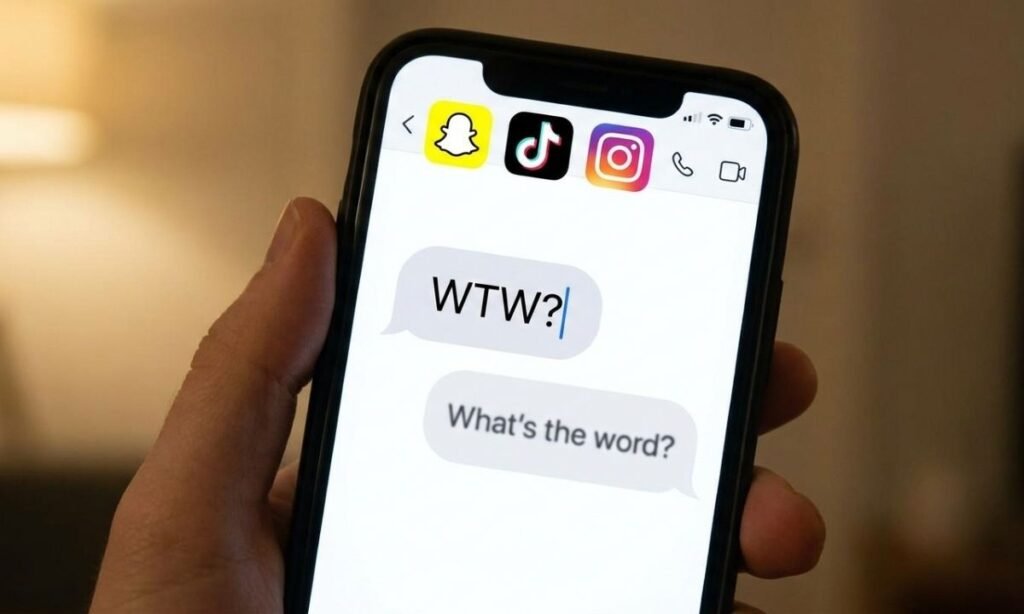
The WTW meaning in text stays almost identical across the big apps. Only the speed and style change.
- Snapchat: Fast and spontaneous. WTW usually comes with a quick plan question and expects a quick reply.
- TikTok: Seen in comments and DMs. It can mean “what’s the word on this trend?” or just a friendly greeting.
- Instagram: Common in DMs and story replies. It feels softer and more social, often after you’ve reacted to someone’s post.
If you’re unsure, look at what the person just posted. A party story plus “WTW” probably means “What’s the plan tonight?”
WTW Meaning in Text From a Guy or Girl
The WTW meaning in text does not change by gender, since it’s just slang. But the setting around it can change how it feels.
From a guy: It’s often a casual check-in, a plan opener, or a lazy “hey.” Some guys use it as a low-effort way to start talking to someone they like.
From a girl: It usually reads the same, though it may come with extra emojis or warmer wording. Many people treat “wtw” from a girl as friendly curiosity.
Instead of reading into gender, look at these signals:
- How often the person texts you
- Whether they add emojis or nicknames
- Whether they follow up with a real question
- The time of day they text
A late-night “wtw” can suggest a different mood than a midday one.
Is WTW a Flirty or Friendly Texting Term?
It can be either. By itself, the WTW meaning in text is neutral and friendly.
It tilts flirty when:
- It comes late at night
- It’s paired with emojis like 😏 or 😉
- The sender adds “wtw with you tonight?”
- Compliments or teasing appear in the same chat
It stays friendly when:
- It comes in a group chat
- It appears during the day
- It’s followed by a clear plan like studying or lunch
If you can’t tell, stay light and polite. A neutral reply keeps every option open, and you can match their energy once their intent becomes clear.
WTW Meaning in Different Texting Situations
Here is how the WTW meaning in text plays out in common scenarios:
| Situation | What WTW likely means | Good reply |
| Friend texts on Friday evening | “What are we doing tonight?” | “Down for food. You?” |
| Crush sends it late at night | A flirty check-in | “Just chilling. What about you?” |
| Group chat goes quiet | “Anyone have plans?” | “Free after 6.” |
| Old friend you haven’t talked to | “Catching up” | “Been busy! How have you been?” |
| Right after big news | “What’s the update?” | “Nothing yet, will tell you.” |
WTW Examples in Text Messages and Online Chats
Real examples make the WTW meaning in text easier to remember:
- “wtw” (a plain greeting)
- “WTW tonight?” (asking about evening plans)
- “WTW with the group project?” (asking for an update)
- “WTW bro, you good?” (a friendly check-in)
- “Haven’t heard from you. WTW?” (reopening a quiet chat)
- “WTW this weekend, anything planned?” (making plans)
Notice that each one is short, casual, and tied to a quick answer.
WTW vs. WYD, WYA, and Other Texting Abbreviations
People mix up these terms because they all start conversations. The WTW meaning in text is the broadest of the group.
| Term | Full form | Main purpose |
| WTW | What’s the word? | General check-in or plan opener |
| WYD | What are you doing? | Asks your current activity |
| WYA | Where you at? | Asks your location |
| WBY | What about you? | Returns the question |
| HBU | How about you? | Returns the question |
| WSP | What’s up? | Casual greeting |
WYA is the most specific, because it’s about location. WYD is about the present activity. WTW covers both and more.
WTW Compared With Similar Texting Terms
Slang such as “what’s good,” “what’s the vibe,” and “what’s the wave” lives in the same family as WTW. They all invite an easy reply, but each has its own flavor.
Key Differences Between WTW and Similar Slang
- WTW vs. WYD: WYD asks what you’re doing right now. WTW can open any topic.
- WTW vs. WSP: WSP is a plain “what’s up.” WTW has a slightly more street-style feel.
- WTW vs. “What’s the wave?”: The wave version focuses on vibe or plan. It’s more common among teens and young adults.
- WTW vs. WYA: WYA asks for a location, usually to meet up.
- WTW vs. HMU: HMU means “hit me up” and invites contact. WTW is the question itself.
Different WTW Variations and Common Ways to Use It
Short additions change the WTW meaning in text a little. Here are the most common forms.
WTW?
A simple greeting. It asks what’s going on and expects a quick answer.
WTW Tonight?
Asks about evening plans. Usually leads to a hangout or call.
WTW This Weekend?
A planning question. Good for group chats and friends.
WTW After Work?
Checks if someone is free later. Common among coworkers who are also friends.
WTW
Without a question mark, it feels extra casual, almost like a nod. Great for close friends.
WTW With You?
Asks what’s happening in your life. Sounds friendly and a little more personal.
WTW Later?
Asks about plans for later in the day. Often followed by “wanna meet?”
WTW for Tonight?
A slightly more direct version of the evening question. It signals real interest in making plans.
WTW Bro?
Friendly and casual, mostly between male friends. Replace “bro” with “man,” “girl,” or a name as needed.
WTW?
Used again in a stand-alone form, often as a reply to someone’s story, post, or odd message. It can also mean “What the what?” when you’re surprised.
How to Reply When Someone Uses WTW
A good reply matches the sender’s tone. Keep it short, natural, and honest. Knowing the WTW meaning in text makes this much easier.
Casual Ways to Respond to WTW
- “Not much, you?”
- “Just chilling. What about you?”
- “Hey! Free later if you want to hang.”
- “Nothing yet. Any ideas?”
Funny Replies to WTW
- “Breathing and snacking. You?”
- “Plotting world peace. And lunch.”
- “Surviving. Barely.”
- “Waiting for your better plan.”
Mature and Confident Responses to WTW
- “Busy day, but I’m free after 7. What’s up?”
- “Working on a few things. What did you have in mind?”
- “Good, thanks. What’s the plan?”
Private or Respectful Ways to Reply
If you don’t want to chat or you feel unsure:
- “Hey! I’m tied up right now. Can we talk later?”
- “Not much, just resting tonight.”
- “Thanks for checking in, but I’ll pass for now.”
You never owe a long answer. Polite and brief is enough.
Regional and Cultural Usage of WTW
There’s no hard data on slang use by country, so treat this as a practical guide, not a statistic.
WTW in Western Culture
Common among teens and young adults in the US, Canada, and the UK. Safe in DMs and group chats.
WTW in Asian Culture
Often seen in chats with English-speaking or bilingual friends. Older users may not know it, so spell it out in mixed groups.
WTW in Middle Eastern Culture
Younger bilingual users sometimes mix it into Arabic chats. A bare “WTW” can feel abrupt with elders, so start with a greeting.
WTW in Global Internet Culture
Gaming servers, TikTok, and Snapchat carry it worldwide. Use it only with people who already text in similar slang.
Frequently Asked Questions
What does WTW mean in text?
It usually means “What’s the word?”, a casual way to ask what’s going on or what the plan is.
What does WTW mean on Snapchat?
It means the same thing: “What’s the word?” People use it to check in or make quick plans.
Is WTW the same as WYD?
No. WYD asks what you’re doing right now, while WTW is a broader check-in or plan question.
Does WTW mean “What’s the wave?”
Yes, sometimes. This version is popular among younger users and asks about plans or the vibe.
Is WTW flirty?
Not by default. It becomes flirty only when tone, timing, and emojis point that way.
How do I reply to WTW?
Keep it short and match their tone. “Not much, you?” works almost every time.
Can I use WTW at work?
It’s best to avoid it with managers or clients. Use it only with close coworkers in casual chats.
Where did WTW originate?
It grew from the spoken phrase “What’s the word?”, linked to hip-hop and Black American English, and spread through social media in the 2010s.
Does WTW have other meanings?
Yes, rarely. It can mean “What the what?”, “Walk the walk,” or topic-based phrases like “What to wear.”
Conclusion
The WTW meaning in text is easy once you know the context: “What’s the word?” is the standard answer, and “What’s the wave?” is the newer twist. It’s friendly, quick, and mostly harmless.
Use it with friends, skip it in formal chats, and watch the tone. Reply in a way that fits the sender’s energy, and you’ll rarely go wrong. Now that you understand the WTW meaning in text, you can answer confidently and send it yourself without second-guessing.

Hi, I’m Alex Carter, a passionate content creator and language enthusiast dedicated to exploring the true meanings behind words, phrases, and modern slang. With over 5 years of experience in content research and digital publishing, I specialize in breaking down complex terms into simple explanations. I focus on delivering well-researched, up-to-date, and SEO-optimized content that answers real user queries.