

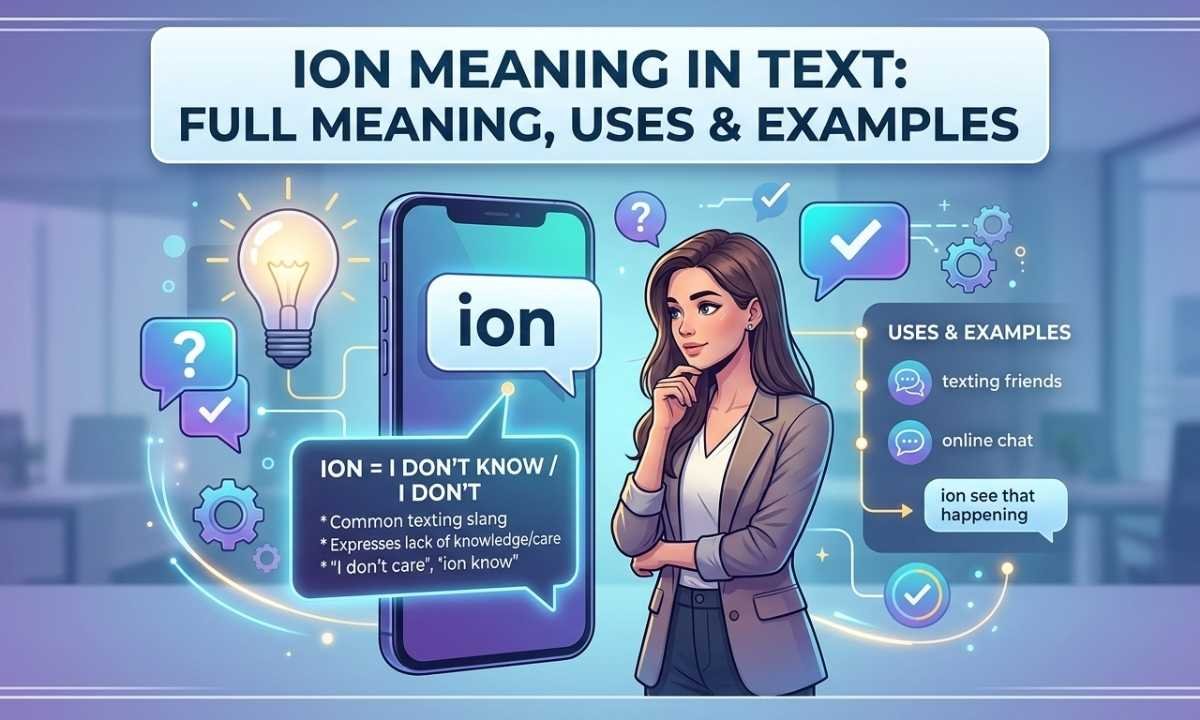
Ion meaning in text confuses a lot of people the first time they see it, mostly because it looks like the science word for a charged particle. In texting, though, ion has nothing to do with chemistry it’s a casual, phonetic way of saying “I don’t.” This guide breaks down the full ion meaning in text, where it came from, and how it’s used differently across TikTok, Instagram, Snapchat, and WhatsApp.
By the end, you’ll also understand a second, less common meaning of ION, plus how to tell the two apart instantly based on context.
What Does Ion Mean in Text?
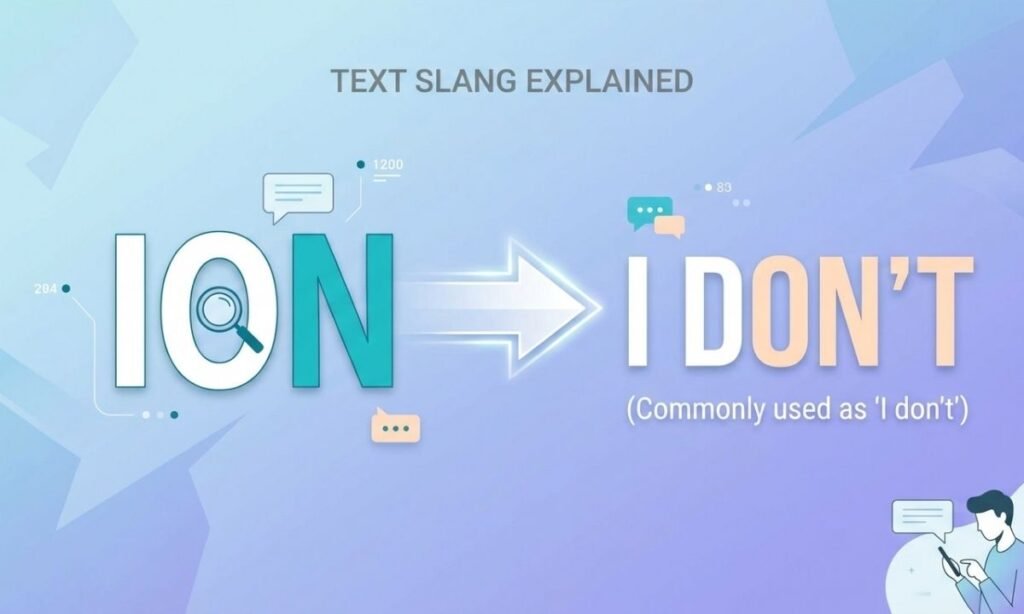
In everyday texting, ion meaning in text is almost always “I don’t.” It’s a phonetic spelling based on how “I don’t” naturally sounds when spoken quickly and casually, especially in African American Vernacular English (AAVE).
Example: “Ion like waking up early.” → translates to “I don’t like waking up early.”
The word strips away the “d” sound in “don’t,” leaving a smoother, faster way to type the same phrase.
Ion Slang Pronunciation
“Ion” is pronounced “eye-ohn,” blending “I” and “don’t” into one quick sound. Say “I don’t know” fast and casually, and it naturally starts to sound like “ion-oh” which is exactly how this slang term was born.
Ion Most Common Meanings at a Glance
Here’s a quick breakdown of the two main interpretations behind ion meaning in text:
| Meaning | Full Form | Common Use |
| Ion | I don’t | Casual denial, disagreement, disinterest |
| ION | In Other News | Changing the subject in a conversation |
Ion Meaning “I Don’t”
This is by far the most common ion meaning in text, especially among younger texters and on social media. It’s used to express disagreement, refusal, or disinterest without spelling out the full phrase.
Examples:
- “Ion think that’s a good idea.”
- “Ion care what people think.”
- “Ion wanna go out tonight.”
In every case, “ion” simply replaces “I don’t,” keeping the tone casual and quick.
Where Did Ion Come From?
Ion meaning in text originated from African American Vernacular English, where “I don’t” is often pronounced without a hard “d” sound. As texting and social media grew, this spoken pattern was written phonetically as “ion.” The slang gained mainstream visibility online around 2015–2018, spreading widely through Twitter and later TikTok, and it has appeared in song lyrics from artists reflecting everyday speech patterns.
ION Meaning “In Other News”
A second, less common ion meaning in text is “In Other News.” This version is typically written in all caps (ION) and is used to shift topics in a conversation, similar to saying “anyway” or “moving on.”
Example: “ION, did you see the game last night?”
This meaning traces back to broadcast news transitions, where anchors used “in other news” to move between unrelated stories before it was shortened for texting.
What does it mean when a girl says “ion”?
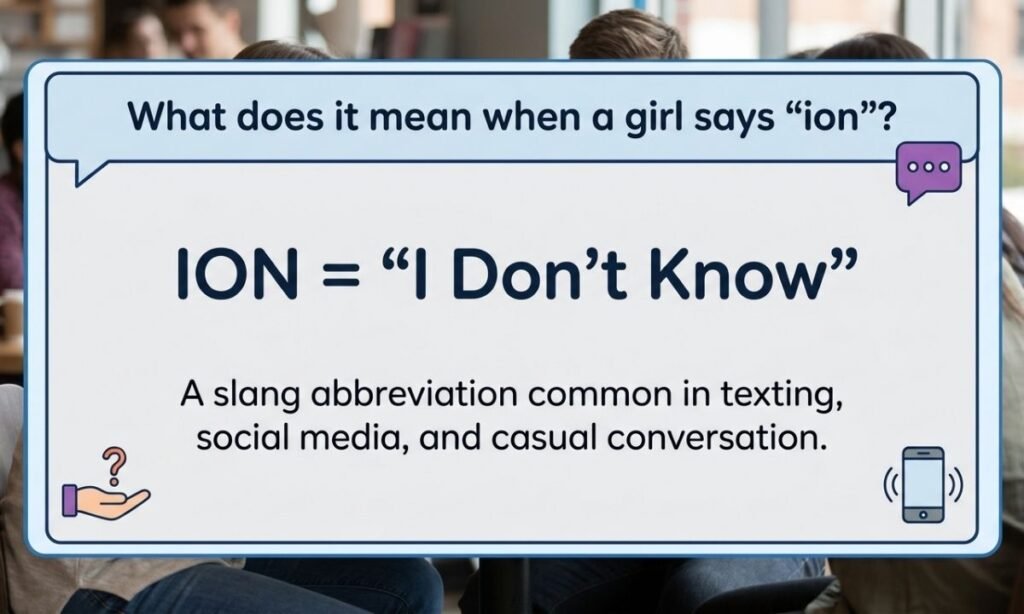
When a girl texts “ion,” the meaning is almost always tied to context rather than gender. Most commonly, it means “I don’t,” used to express disinterest, disagreement, or a casual no. The tone playful, blunt, or neutral usually depends on the rest of the message rather than who sent it.
What does ion mean on TikTok?
On TikTok, ion meaning in text shows up constantly in captions and comments, almost always as a shorthand for “I don’t.” It’s common in relatable posts like “ion have the energy for this today,” reflecting TikTok’s casual, conversational tone.
What Does Ion Mean in Text on Instagram?
On Instagram, ion functions the same way a quick, casual replacement for “I don’t,” often used in comments or DMs. Example: “ion think so, but let’s see.”
What Does Ion Mean on Snapchat?
On Snapchat, ion meaning in text keeps its core definition of “I don’t,” fitting naturally into Snapchat’s fast, informal messaging style. It’s commonly used in quick replies and streak conversations where typing speed matters.
Ion Meaning in Whatsapp
On WhatsApp, ion is used in personal or group chats the same way it is elsewhere as a casual stand-in for “I don’t.” Because WhatsApp conversations often mix formal and informal messaging, it’s more common in chats with close friends than in group chats with mixed audiences.
Ion Meaning Urban Dictionary
On Urban Dictionary, ion meaning in text is defined primarily as a phonetic spelling of “I don’t,” with entries reflecting real examples like “ion know” and “ion care.” Because entries are crowdsourced, definitions can vary slightly, but the dominant meaning consistently points back to “I don’t.”
What Does Ion Mean on a Fan
Outside of texting, “ion” has a completely unrelated, technical meaning: many electric fans and air purifiers include an “ION” or “anion” button that activates a negative ion generator. This feature releases negative ions into the air to help reduce dust, odors, and airborne particles a meaning entirely separate from the slang version used in texting.
How Ion Is Used Across Platforms
Across nearly every messaging app and social platform, ion meaning in text stays consistent as “I don’t,” though tone can shift slightly by platform:
- TikTok relatable, often humorous captions
- Instagram casual comments and DMs
- Snapchat quick, fast-paced replies
- WhatsApp informal chats with friends
“Ion vs IDK” What Is the Difference?
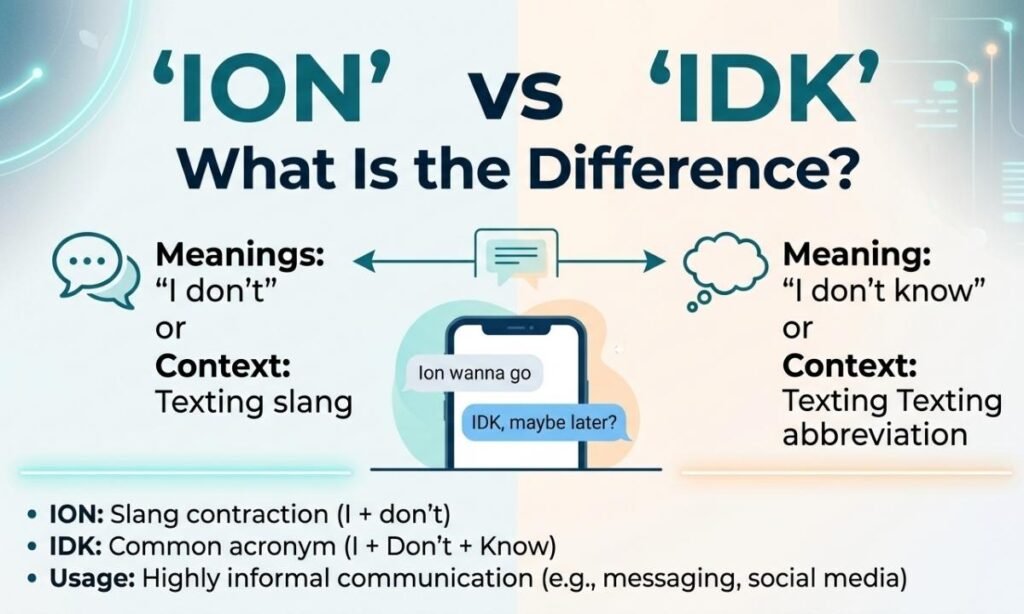
“Ion” and “IDK” are often confused, but they mean different things. “Ion” stands for “I don’t,” expressing disagreement, refusal, or disinterest. “IDK” stands for “I don’t know,” expressing uncertainty rather than denial.
| Term | Full Meaning | Example |
| Ion | I don’t | “Ion like spicy food.” |
| IDK | I don’t know | “IDK what time we’re meeting.” |
Mixing these up can change the entire meaning of a sentence, so it’s worth double-checking context before replying.
When to Use Ion And When Not To
Like most internet slang, ion meaning in text fits naturally into some conversations and feels out of place in others.
Use Ion When:
- Texting friends who use casual slang regularly
- Expressing a quick opinion, disagreement, or preference
- Keeping a conversation light, fast, and informal
Never Use Ion In:
- Professional emails or workplace messages
- Formal conversations with teachers, clients, or unfamiliar contacts
- Situations where clarity matters more than casual tone
Frequently Asked Questions
What does “ion” mean in a text message?
Ion meaning in text most commonly stands for “I don’t,” used to express disagreement, refusal, or disinterest casually.
What does ION mean in all caps?
In all caps, ION sometimes means “In Other News,” used to change the subject in a conversation.
Where does the slang “ion” come from?
Ion comes from African American Vernacular English, based on how “I don’t” is naturally pronounced in fast, casual speech.
Is “ion” the same as “IDK”?
No, “ion” means “I don’t,” while “IDK” means “I don’t know” they express different things.
Is “ion” rude to use in a text?
No, ion is generally casual and neutral, though tone and context still shape how a message feels.
What does ion mean on TikTok or Instagram?
On both platforms, ion is almost always short for “I don’t,” used in captions, comments, and casual replies.
Can “ion” mean something related to science?
Outside of texting, “ion” refers to a charged particle in chemistry, or a feature on fans and air purifiers that releases negative ions.
Is it okay to use “ion” in professional messages?
No, ion is too casual for formal or workplace communication and should be reserved for informal texting.
Is “ion” still commonly used today?
Yes, ion remains widely used across texting and social media, especially among younger users who prefer quick, casual replies.
Conclusion
At its core, ion meaning in text almost always comes down to one simple phrase: “I don’t.” Whether you’re scrolling through TikTok captions, replying on Snapchat, or texting a friend on WhatsApp, this casual slang term keeps conversations quick and relaxed. Now that you understand its origin, its less common “In Other News” meaning, and how it differs from similar slang like “IDK,” you’ll never have to pause and wonder what those three letters mean again.

Hi, I’m Alex Carter, a passionate content creator and language enthusiast dedicated to exploring the true meanings behind words, phrases, and modern slang. With over 5 years of experience in content research and digital publishing, I specialize in breaking down complex terms into simple explanations. I focus on delivering well-researched, up-to-date, and SEO-optimized content that answers real user queries.