

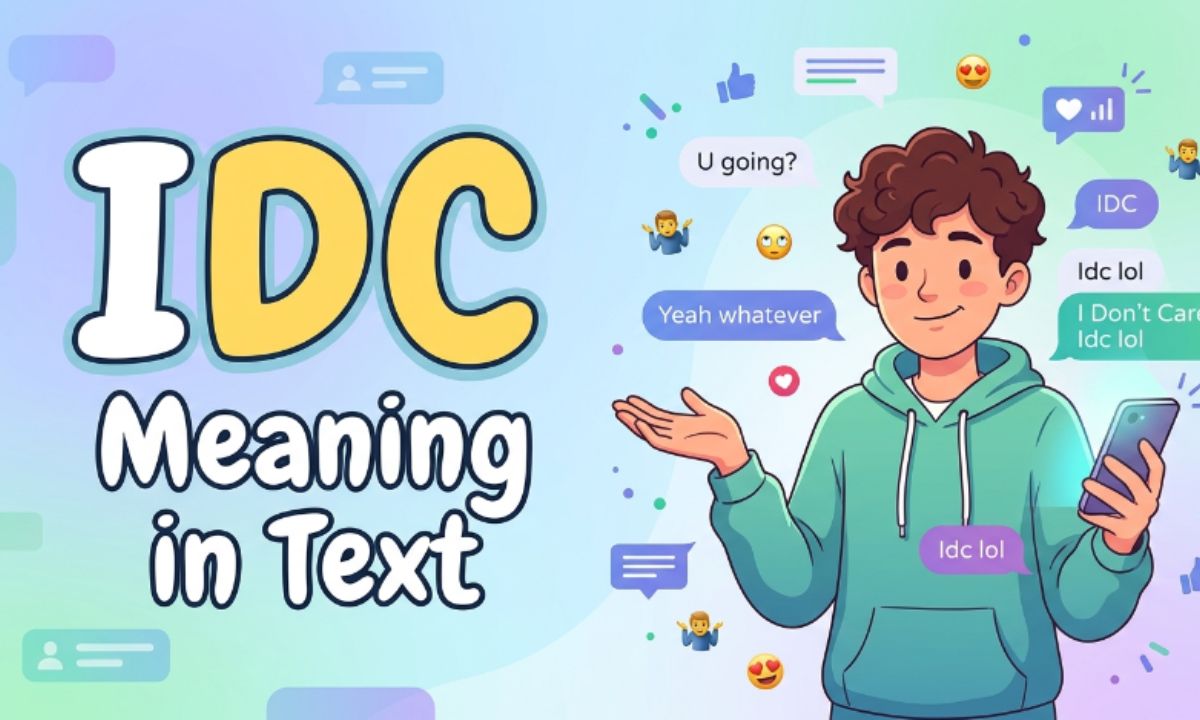
IDC Meaning in Text is one of the most searched texting questions in 2026, and for good reason — this tiny three-letter abbreviation shows up everywhere from casual chats to Instagram comments, yet its tone can shift completely depending on who sends it. If you have ever received a text that just said “idc” and wondered whether the person was relaxed, annoyed, or hurt, you are not alone. This guide breaks down everything you need to know about IDC Meaning in Text, including its origin, emotional tone, platform-specific usage, and how to reply the right way.
Quick Answer: What Does IDC Mean?
IDC stands for “I Don’t Care.” It is used when someone has no strong opinion, feels indifferent, or simply does not want to engage with a topic further. That is the short version of IDC Meaning in Text, but the real meaning depends heavily on context, punctuation, and the relationship between the people texting.
What Does IDC Stand For?
IDC is a shortened form of the phrase “I Don’t Care.” Like many texting abbreviations, it drops vowels and spaces to save time and characters. It follows the same pattern as IDK (I Don’t Know) or IDGAF (I Don’t Give A ****), making it part of a larger family of “indifference” acronyms used in everyday digital conversation. Learning this basic breakdown is the first step toward fully understanding IDC Meaning in Text in any situation.
What Does IDC Mean in a Text Message?
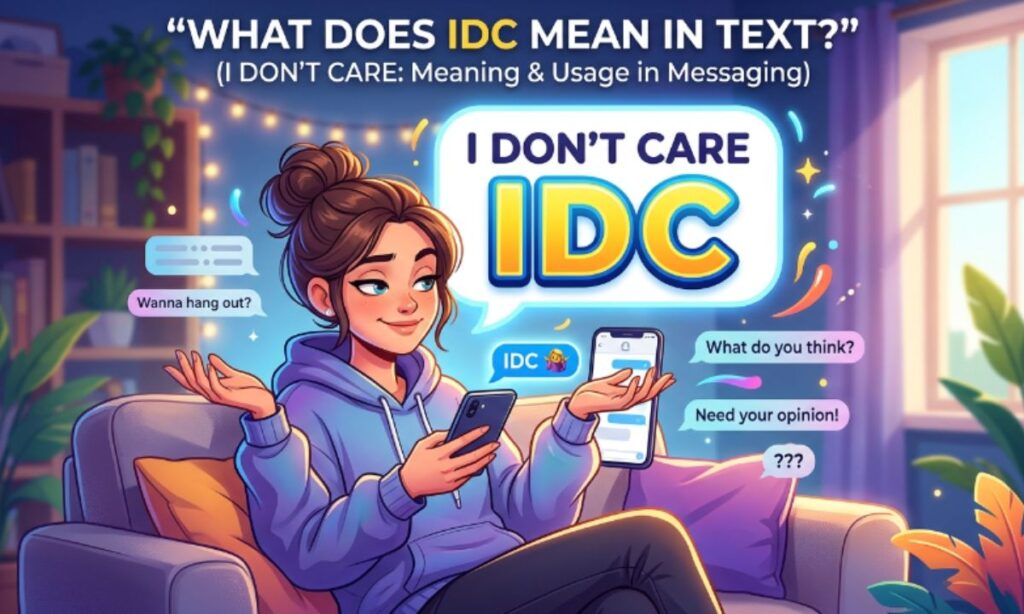
In a text message, IDC Meaning in Text usually points to one simple idea: the sender has no preference or is not invested in the outcome. However, the same abbreviation can carry very different emotional weight depending on the situation. A friend texting “idc, you pick the movie” feels completely different from a partner replying “idc” in the middle of a serious talk.
Why Do People Use IDC?
People use IDC for several reasons, and understanding these motivations is central to grasping the true IDC Meaning in Text. These reasons shape how the abbreviation should be interpreted in real conversations.
- They have no preference – The topic genuinely does not matter to them (e.g., choosing a restaurant).
- They are not interested – They want to move the conversation along without engaging further.
- They are annoyed – The short reply signals irritation without starting a fight.
- They want to end the conversation – IDC is a quick way to shut down a back-and-forth.
- They are trying to appear unbothered – Sometimes people say IDC to hide that they actually do care.
Is IDC Rude?
IDC is not inherently rude, but its tone can range from harmless to dismissive depending on the situation.
| Usage Type | Example | Tone |
| Friendly or harmless use | “idc, whatever works for you!” | Relaxed, easygoing |
| Slightly blunt use | “idc, just decide already” | Mildly impatient |
| Clearly dismissive use | “IDC. Stop asking.” | Cold, dismissive |
Friendly or harmless use
When paired with lowercase letters, emojis, or a follow-up like “lol,” IDC usually sounds casual and easygoing rather than harsh.
Slightly blunt use
Without extra softening words, IDC can sound short and a little impatient, even if that was not the intention.
Clearly dismissive use
All caps, punctuation like periods, or IDC used mid-argument almost always signals real frustration or a desire to shut the topic down.
Does IDC Mean Someone Truly Doesn’t Care?
Not always. This is one of the most misunderstood parts of IDC Meaning in Text, and it’s why context matters more than the letters alone. Sometimes people say “idc” because they genuinely feel neutral. Other times, they say it because they are hurt, overwhelmed, or trying to protect themselves emotionally. Reading the surrounding conversation, punctuation, and relationship context matters more than the letters themselves.
What does IDC Mean from a Girl
When a girl texts IDC, it can mean genuine indifference, or it can be a way of testing how much the other person actually cares about the outcome. In relationship contexts, IDC from a girl sometimes hides disappointment that she does not want to openly express yet.
What does IDC Mean from a Boy
When a boy texts IDC, it often reflects a more literal, straightforward lack of preference. However, in tense conversations, it can also be a way to avoid confrontation or emotional discussion rather than actually feeling nothing.
IDC Meaning in Different Contexts
The IDC Meaning in Text changes noticeably depending on where and with whom it is used.
IDC in Casual Texting
Between friends discussing plans, IDC almost always means genuine indifference — pizza or burgers, it truly does not matter.
IDC in an Argument
During a disagreement, IDC often signals frustration, a desire to disengage, or emotional withdrawal rather than true neutrality.
IDC Between Friends
Among close friends, IDC is lighthearted and rarely taken personally, since the relationship already has trust built in.
IDC in a Relationship
In romantic texting, IDC can carry more weight. It may reflect real indifference, but it can also mask hurt feelings or emotional distance.
IDC on Social Media
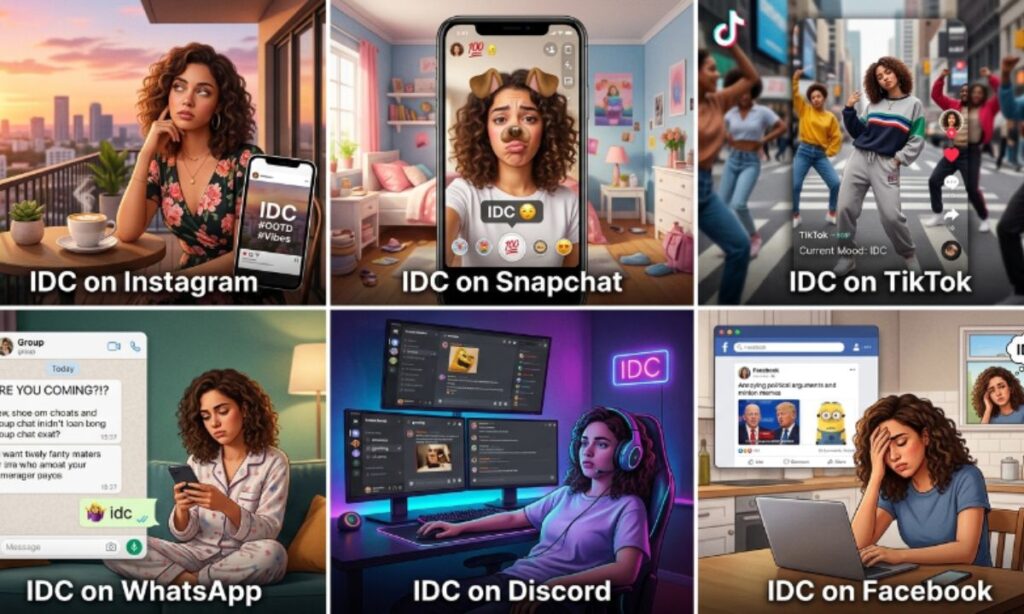
Across platforms, the core IDC Meaning in Text stays consistent, but the tone shifts based on the app’s culture and audience.
IDC on Instagram
Usually used in comments or DMs to express casual disinterest in a topic, often in a joking way.
IDC on Snapchat
Common in quick chat replies, often paired with emojis to keep the tone light between friends.
IDC on TikTok
Frequently used in comment sections to dismiss drama or show that a user is not emotionally invested in a trend or debate.
IDC on WhatsApp
Often used in group chats to move a decision along quickly, such as picking a meeting time.
IDC on Discord
Common in gaming and community servers, usually to signal indifference about game modes, teams, or minor decisions.
IDC on Facebook
Typically appears in comment threads, often to shut down an unnecessary debate.
IDC in Gaming
In gaming chats, the IDC meaning in text usually points to a player having no preference about maps, characters, or strategy, and being happy to go along with the group’s decision.
IDC on Dating Apps
On dating apps, IDC can signal a laid-back personality, but overuse may come across as low effort or emotionally unavailable, so context matters here too.
IDC Meaning in Professional Messages
In workplace chats, IDC is generally discouraged because it can sound careless or unprofessional, even if the sender meant it casually. Knowing IDC Meaning in Text helps professionals avoid tone mismatches in work conversations.
IDC Meaning Medical
In a medical context, IDC often stands for “Indwelling Catheter” or, in oncology, “Invasive Ductal Carcinoma,” a type of breast cancer diagnosis. This is completely unrelated to texting slang and depends entirely on the field.
IDC Meaning in Email
In formal or semi-formal emails, IDC is rarely appropriate. If used at all, it is typically in casual workplace chat tools rather than formal email threads, since it can appear dismissive to colleagues or clients.
IDC Meaning in Data Center
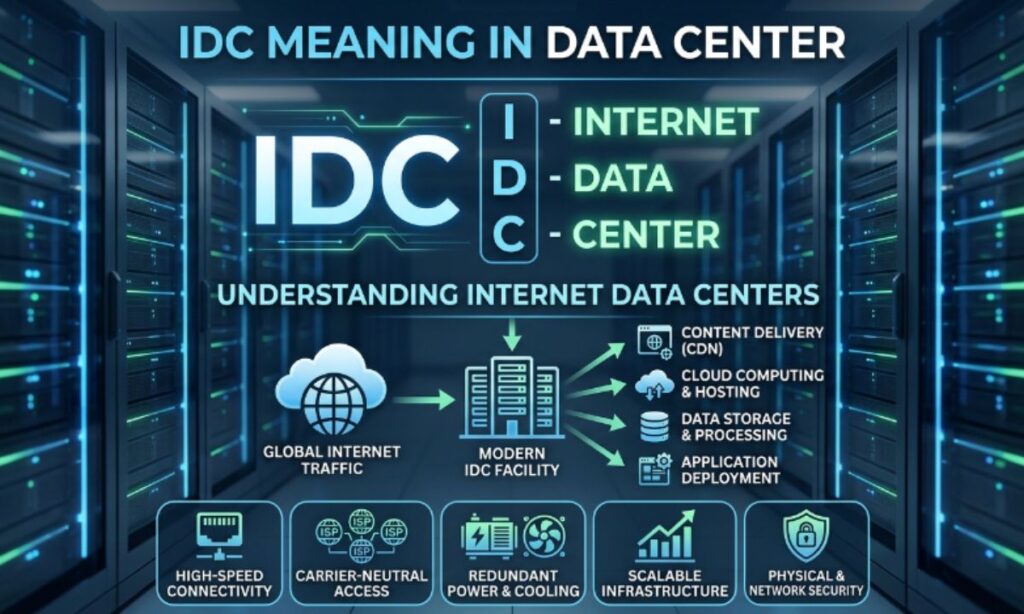
In technology and business settings, IDC can also refer to “Internet Data Center” or the market research firm “International Data Corporation,” both common in IT and industry reports.
IDC Meaning Legal
In legal contexts, IDC sometimes refers to “Information Disclosure Statement” in patent law or other formal abbreviations, again completely separate from its texting usage.
IDC vs I Don’t Mind
While similar, these phrases carry different tones. “I don’t mind” sounds warm and accommodating, while IDC can feel more neutral or detached, depending on delivery.
IDC vs IDK
IDC (I Don’t Care) expresses indifference about an opinion or outcome, while IDK (I Don’t Know) expresses uncertainty or lack of information. They are often confused but serve different purposes in conversation.
IDC vs Whatever
| Term | Typical Tone | Common Use |
| IDC | Neutral to mildly dismissive | Texting, casual chats |
| Whatever | Often more sarcastic or annoyed | Spoken and written arguments |
IDC
Tends to feel shorter and less emotionally loaded than a full word.
Whatever
Often carries more attitude and can sound more confrontational in the same context.
IDC vs IDGAF
IDGAF is a much stronger, more aggressive version of indifference, while the everyday IDC Meaning in Text stays milder and more socially acceptable across different relationships.
IDC vs I Couldn’t Care Less
“I couldn’t care less” is a more emphatic, complete-sentence version of the same sentiment, often used for dramatic emphasis rather than quick texting.
Common Examples of IDC in Text
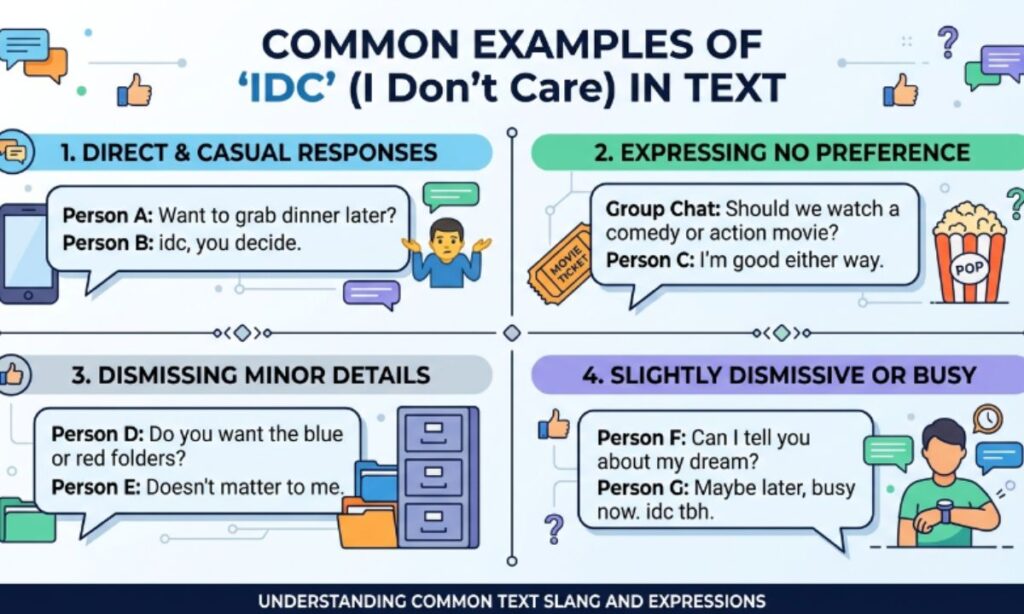
Understanding real examples helps clarify IDC Meaning in Text in everyday situations, since context often says more than the abbreviation itself.
- No preference: “Pizza or tacos tonight?” “idc, both sound good.”
- Choosing a movie: “You pick the movie, idc what we watch.”
- Showing disinterest: “They’re still talking about the drama.” “idc honestly.”
- Ending an argument: “Fine, IDC anymore, let’s just drop it.”
- A defensive response: “Did that comment bother you?” “IDC.”
How to Reply When Someone Says IDC
How you respond depends on the tone behind the message and the true IDC meaning in text the sender intended.
- If they mean “I don’t mind”: Simply proceed with a decision, since they are genuinely flexible.
- If they sound annoyed: Give them space rather than pushing the topic further.
- If they sound hurt: Gently ask if everything is okay instead of taking the reply literally.
- If you think they are being rude: Calmly point out that the tone felt dismissive.
- If you want to keep things playful: Respond with humor to match their casual energy.
How to Use IDC Without Sounding Rude
- Add a lowercase tone instead of all caps.
- Pair it with a smiley or “lol” to soften the message.
- Follow up with a suggestion, like “idc, but maybe Italian?”
- Avoid using it as a one-word reply during serious conversations.
When Should You Avoid Using IDC?
Avoid IDC in formal emails, workplace communication, serious relationship discussions, or any conversation where the other person needs reassurance rather than indifference.
Is IDC Flirty?
IDC itself is not inherently flirty, but combined with playful banter, emojis, or teasing follow-up texts, it can be part of lighthearted, flirtatious conversation.
Is IDC Offensive?
IDC is not offensive by default. It becomes offensive only when used dismissively toward someone expressing genuine concern or emotion.
Common Mistakes People Make With IDC
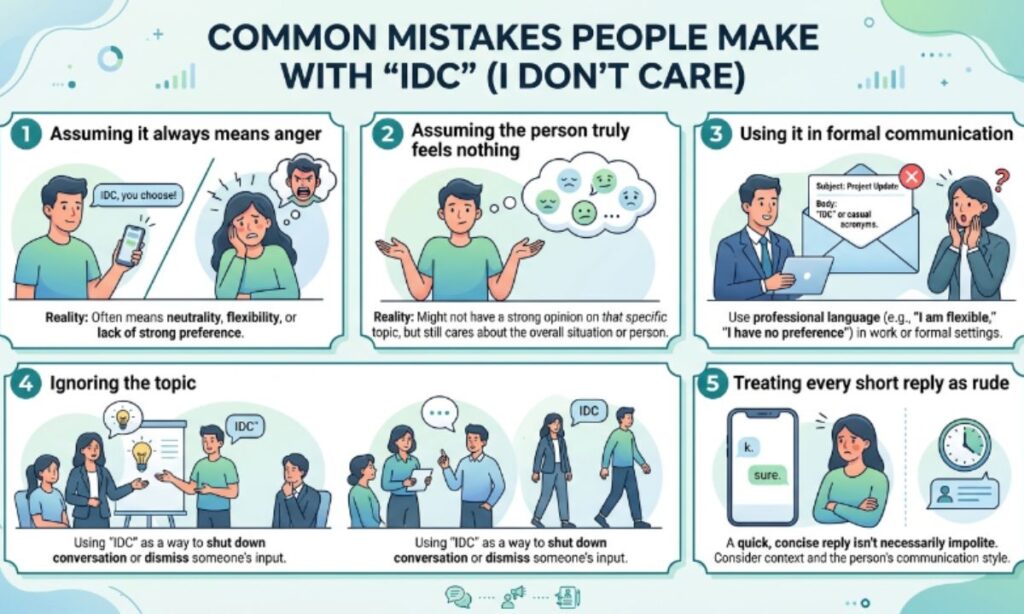
Mistake 1: Assuming it always means anger
Most of the time, IDC simply reflects indifference, not hostility.
Mistake 2: Assuming the person truly feels nothing
Sometimes IDC hides real emotions the sender is not ready to share.
Mistake 3: Using it in formal communication
Misreading IDC Meaning in Text as acceptable in workplace or business messages can quietly damage professionalism.
Mistake 4: Ignoring the topic
Replying IDC without any context can confuse the other person about what exactly you don’t care about.
Mistake 5: Treating every short reply as rude
Not every quick IDC is meant to hurt; brevity does not always equal disrespect.
What Does IDC Mean With a Period?
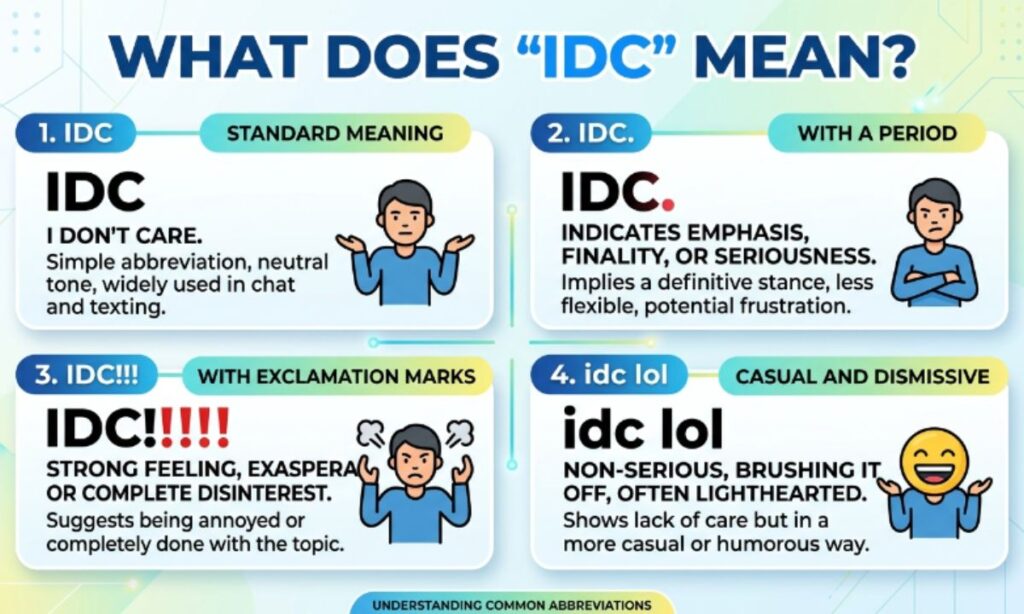
Punctuation changes tone significantly in the overall IDC Meaning in Text, sometimes flipping a casual reply into a cold one.
IDC
Plain and neutral, usually casual.
IDC.
The period adds a blunt, final tone, often signaling annoyance.
IDC!!!
Multiple exclamation marks usually signal frustration or emphasis, not excitement.
idc lol
Lowercase with “lol” softens the message into a lighthearted, joking tone.
What Does “IDCC” Mean?
IDCC is less common but is sometimes used as an exaggerated or typo version of IDC, still meaning “I don’t care,” often typed quickly without much thought.
What Does “IDC Fr” Mean?
“IDC fr” means “I don’t care, for real,” used to emphasize genuine indifference rather than a sarcastic or joking tone.
What Does “IDC Tbh” Mean?
“IDC tbh” means “I don’t care, to be honest,” often used to soften a blunt statement by adding a tone of honesty rather than dismissiveness.
Related Texting Abbreviations
Once you understand IDC Meaning in Text, these related abbreviations become much easier to decode too.
| Abbreviation | Meaning |
| IDK | I Don’t Know |
| IDGAF | I Don’t Give A **** |
| NVM | Never Mind |
| TBH | To Be Honest |
| FR | For Real |
| WYD | What You Doing |
| OMW | On My Way |
Frequently Asked Questions
What does IDC mean for a girl?
It usually means genuine indifference, though in emotional conversations it can sometimes mask hidden feelings.
What does IDC mean in texting slang?
IDC means “I Don’t Care” and is used to express indifference or lack of a strong preference.
What is IDC in Gen Z?
Among Gen Z, IDC is a common, casual way to show low-key detachment without sounding overly dramatic.
What does “50 idk 50 idc” mean?
It means the person is split between not knowing and not caring about the topic, often used humorously.
Is IDC the same as IDK?
No, IDC means “I don’t care” while IDK means “I don’t know” — they express different things entirely.
Can IDC mean someone is upset?
Yes, depending on tone and context, IDC can signal frustration or emotional withdrawal rather than true neutrality.
What does lowercase idc mean compared to IDC?
Lowercase usually feels more relaxed and friendly, while all caps can sound more blunt or intense.
Is it okay to use IDC with a boss or coworker?
Generally no, since it can come across as unprofessional in workplace communication.
Does IDC mean the conversation is over?
Sometimes, especially if used to end a disagreement, but not always — context determines this.
Final Answer
At its core, IDC Meaning in Text comes down to “I Don’t Care,” but as this guide shows, the real meaning lives in the details — punctuation, platform, relationship, and timing all shape how the message lands. Whether it’s a harmless reply about dinner plans or a loaded response during a tough conversation, understanding IDC Meaning in Text helps you read between the lines and respond with more empathy and clarity in your everyday digital conversations.

Hi, I’m Alex Carter, a passionate content creator and language enthusiast dedicated to exploring the true meanings behind words, phrases, and modern slang. With over 5 years of experience in content research and digital publishing, I specialize in breaking down complex terms into simple explanations. I focus on delivering well-researched, up-to-date, and SEO-optimized content that answers real user queries.